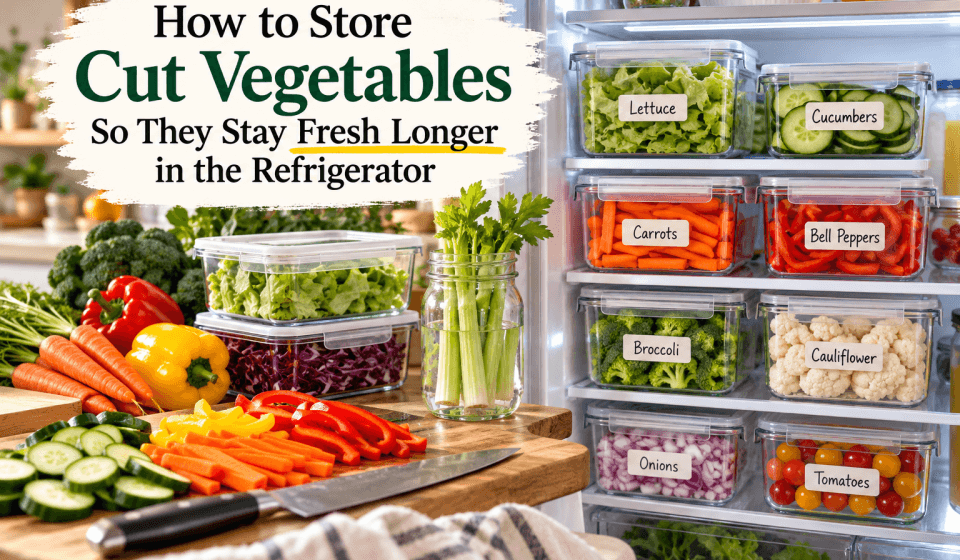

Knowing how to store cut vegetables can help preserve their texture, flavor, and freshness while making meals faster to prepare. The key is to cool them promptly, remove excess moisture, choose the right container, and match the storage method to the type of vegetable. This guide explains how to prepare cut vegetables for the refrigerator, how long common vegetables usually keep their quality, and which storage mistakes cause them to spoil quickly.
How to Store Cut Vegetables in the Refrigerator
- Wash your hands, knife, cutting board, and containers before preparing the vegetables.
- Cut away damaged areas and remove tough stems, leaves, or peels as needed.
- Dry the vegetables thoroughly. Excess water encourages sogginess, mold, and decay in many vegetables.
- Use an airtight container or resealable bag suited to the vegetable.
- Label the container with the date so older produce gets used first.
- Refrigerate cut vegetables promptly, ideally within two hours of cutting. If the surrounding temperature is above 90°F (32°C), refrigerate them within one hour.
Keep the refrigerator at 40°F (4°C) or below. A refrigerator thermometer is useful because the temperature shown on a dial may not reflect the actual temperature inside.
Prepare Cut Vegetables for Better Storage
Keep moisture under control
Moisture is helpful for some vegetables but harmful for others. Cut carrots and celery can stay crisp when stored with a little water, while chopped lettuce, spinach, mushrooms, and broccoli usually last longer when they are kept as dry as possible.
After washing vegetables, dry them with a clean kitchen towel or salad spinner. If you are not using them immediately, it can be more practical to cut them first, dry them well, and then refrigerate them in a container lined with a paper towel. Replace the towel if it becomes damp.
Choose the right container
Airtight glass or plastic containers work well for most chopped vegetables. They protect cut surfaces from refrigerator odors and slow moisture loss. Resealable bags can also be useful, especially for sliced peppers, onions, or vegetables that will be used within a few days.
Do not pack vegetables tightly if they are still warm or damp. Crowding traps condensation and can make the bottom layer soft. Leave a little room for air circulation, or divide a large batch between two containers.
Store vegetables in useful portions
Divide vegetables according to how you plan to use them. For example, keep diced onions separate from chopped salad greens, and portion stir-fry vegetables into containers large enough for one meal. Smaller portions are easier to inspect and reduce the number of times the entire batch is opened.
Best Storage Methods for Common Cut Vegetables
Carrots and celery
Carrot sticks and celery pieces can be stored in an airtight container. For maximum crispness, cover them with cold water and refrigerate them, changing the water daily or whenever it becomes cloudy. Drain and dry them before serving.
If you prefer not to use water, wrap the pieces loosely in a slightly damp paper towel and place them in a sealed container. This is convenient for short-term storage, such as preparing snacks for the next few days.
Bell peppers
Sliced or diced bell peppers should be dried well and stored in a sealed container lined with a dry paper towel. They generally keep their best texture for several days. If the pieces begin to look wet or soft, remove them from the container, discard any spoiled pieces, and replace the damp towel.
Onions and garlic
Cut onions should be stored in a tightly sealed container because their odor can spread to other foods. A glass container with a secure lid is particularly useful. Use cut onions within several days for the best flavor and texture.
Peeled or chopped garlic can also be refrigerated in a sealed container. Do not store fresh garlic in oil at room temperature, because that combination can create a food-safety risk. If garlic is covered with oil, keep it refrigerated and use it promptly according to a reliable food-safety recommendation.
Leafy greens and lettuce
Leafy greens are easily damaged by excess moisture. Remove wilted leaves, wash the greens if needed, and dry them thoroughly before storage. Place them in a container or produce bag with a paper towel to absorb condensation. Avoid crushing the leaves under heavy items.
For chopped lettuce, a wide container is better than a tightly compressed bag. Less pressure means fewer bruised edges and a better texture in salads.
Broccoli and cauliflower
Cut broccoli and cauliflower should be dry before refrigeration. Store them in a container or loosely closed produce bag with enough room to prevent crushing. A paper towel can help absorb extra moisture, but do not wrap the vegetables so tightly that air cannot move around them.
Use them relatively soon if you want firm florets. As they age, the florets may soften and the odor may become stronger even when they are still usable for cooking.
Cucumbers and zucchini
Cut cucumbers and zucchini release water quickly. Pat them dry, store them in a shallow airtight container, and place a paper towel underneath. Avoid soaking them unless you are using them right away. Soggy pieces are more likely to develop a soft texture.
For salads, you can also store the cut vegetables separately from dressing, salt, and juicy ingredients. Add these shortly before serving to reduce watery salads.
Mushrooms
Cut mushrooms should be kept as dry as possible. Store them in a paper bag or a container that allows some air exchange rather than in a tightly sealed, damp plastic bag. If you wash mushrooms, dry them immediately and thoroughly.
Because mushrooms absorb water and become slippery easily, it is often best to slice only what you expect to cook within a short period.
Potatoes and sweet potatoes
Cut potatoes can discolor when exposed to air. Store them submerged in cold water in the refrigerator if you need to prepare them ahead of cooking. Use them within about a day for the best quality, and drain and rinse them before cooking if necessary.
Do not leave cut potatoes soaking on the counter. Refrigeration is important, and the container should be covered to prevent contamination and odor transfer.
Avocado and tomatoes
Cut avocado browns quickly. Press plastic wrap or a reusable cover directly against the exposed flesh, place it in an airtight container, and refrigerate it. Some browning is harmless and can be scraped away, but discard avocado that has an unpleasant smell, extensive sliminess, or mold.
Whole tomatoes are usually best kept at room temperature for flavor, but cut tomatoes should be refrigerated in a covered container. Use them promptly because their texture softens quickly.
How Long Do Cut Vegetables Last?
Storage time depends on freshness, temperature, cleanliness, moisture, and how finely the vegetables were cut. These are practical quality guidelines rather than guarantees:
- Carrot sticks: about one to two weeks when kept properly chilled; water storage can help maintain crispness.
- Celery pieces: commonly several days to about one week, especially when protected from drying.
- Bell peppers: about three to five days for the best texture.
- Chopped onions: about five to seven days in a well-sealed container.
- Leafy greens: roughly three to seven days, depending on how well they were dried.
- Broccoli and cauliflower florets: commonly three to five days.
- Sliced cucumbers and zucchini: usually two to four days before texture declines.
- Cut mushrooms: often a few days, provided they remain dry and firm.
- Cut potatoes: ideally used within about one day when stored in water.
When in doubt, judge the vegetable by its condition rather than the date alone. Storage times are shorter if the produce was already old, bruised, warm, or stored while wet.
Signs Cut Vegetables Should Be Discarded
Throw away cut vegetables if they show mold, an unpleasant or fermented odor, widespread slime, or a distinctly rotten appearance. Do not simply cut mold off soft, moist vegetables such as tomatoes, cucumbers, zucchini, or leafy greens; contamination may extend below the visible surface.
Minor drying, slight browning, or a few limp edges does not always mean a vegetable is unsafe. These quality changes may be acceptable in soup, sauce, omelets, or stir-fries. However, use your judgment and discard anything that looks or smells spoiled.
Common Mistakes That Make Cut Vegetables Spoil Faster
- Putting wet vegetables straight into a sealed container: Dry them first, or use a paper towel to manage condensation.
- Leaving cut produce at room temperature: Refrigerate it promptly, particularly in a warm kitchen.
- Storing everything in one container: Separate vegetables with different moisture levels and strong odors.
- Keeping dressing or salt with salad vegetables: Add them just before eating to prevent wilting.
- Overfilling containers: Crowding causes bruising and traps moisture.
- Forgetting the date: A simple label makes it easier to use older produce first.
- Relying on smell alone: Good odor does not replace clean handling and proper refrigeration.
Frequently Asked Questions
Should cut vegetables be washed before storing?
They can be washed before storage if they are dried very well. If you cannot dry them thoroughly, wash them just before use instead. Wet storage is especially troublesome for greens, mushrooms, cucumbers, and zucchini.
Can cut vegetables be frozen instead of refrigerated?
Yes, many vegetables can be frozen, but most need blanching first to protect their color, flavor, and texture. Carrots, broccoli, cauliflower, and peppers freeze better than raw cucumbers, lettuce, or tomatoes, which usually become soft after thawing.
Is it safe to store cut vegetables in water?
It is suitable for vegetables such as carrot sticks, celery, and cut potatoes when the container is refrigerated and the water is kept clean. Change the water regularly, and do not leave the vegetables soaking at room temperature.
Where should cut vegetables go in the refrigerator?
Use the crisper drawer when possible, but keep cut produce in covered containers. Avoid storing ready-to-eat vegetables beneath raw meat, poultry, or seafood, where drips could contaminate them.
Can cut vegetables be stored with fruit?
Some fruits release ethylene gas, which can speed ripening and quality loss in nearby produce. When practical, keep cut vegetables separate from ripening fruit, especially in a crowded refrigerator. Separate containers also help prevent odors and moisture from spreading.
A Simple Routine for Fresher Prepped Vegetables
For reliable results, prepare only as much as you can use within several days. Wash and cut the vegetables, dry them carefully, place each type in a suitable container, and add a date label. Keep crisp vegetables protected from drying, keep delicate vegetables dry, and store juicy ingredients separately from greens. This small routine makes vegetables easier to use while reducing waste and helping them maintain a better texture.