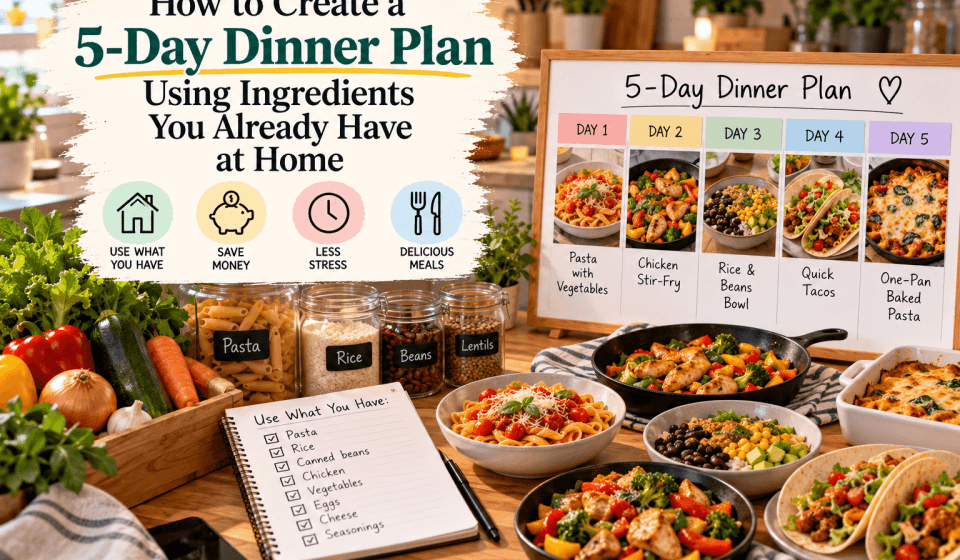

Creating a 5-day dinner plan using ingredients you already have at home is a practical way to save money, reduce food waste, and avoid the daily question of “What should we eat?” You do not need a perfectly stocked pantry or five completely different recipes. With a quick inventory, a few flexible meal ideas, and some smart ingredient overlap, you can turn what is already in your kitchen into satisfying dinners for the week.
This guide shows you how to check your supplies, choose balanced meals, reuse ingredients without making dinner feel repetitive, and build a realistic five-night plan. It also includes an example plan and simple ways to adjust it for vegetarian, family-friendly, or low-effort cooking.
Start with a quick kitchen inventory
Before planning recipes, find out what you actually have. Check the refrigerator, freezer, pantry, and any cupboards where dry goods are stored. Write down ingredients in groups rather than listing every item separately.
- Proteins: eggs, chicken, ground meat, canned tuna, beans, lentils, tofu, cheese, or frozen seafood
- Vegetables: fresh produce, frozen vegetables, salad greens, onions, potatoes, carrots, and vegetables that need using soon
- Carbohydrates: rice, pasta, tortillas, bread, noodles, couscous, oats, or potatoes
- Flavor builders: garlic, ginger, herbs, spices, soy sauce, stock, mustard, salsa, curry paste, tomato products, and vinegar
- Finishing ingredients: lemon or lime, yogurt, sour cream, nuts, seeds, breadcrumbs, and fresh herbs
While checking, separate foods into three categories:
- Use first: fresh items that are softening, wilting, or close to their use-by date
- Use soon: ingredients that should be eaten within the next week
- Long-lasting: frozen foods, canned goods, grains, pasta, and unopened pantry staples
Prioritize ingredients that spoil quickly. A bag of spinach can become part of several dinners, while dried pasta can wait. This simple order prevents waste and gives your meal plan a useful starting point.
Choose a flexible meal structure
A five-day dinner plan is easier to build when each meal follows a simple formula:
Protein or hearty base + vegetables + filling carbohydrate + sauce or seasoning
For example, chicken, roasted vegetables, rice, and a yogurt sauce make one dinner. The same vegetables and rice can later become a stir-fry with eggs or beans. This approach gives you structure without requiring an exact recipe for every night.
It also helps to assign a general cooking style to each day. A useful pattern might be:
- Day 1: Use the most perishable fresh ingredients
- Day 2: Make a one-pan or sheet-pan meal
- Day 3: Turn leftovers into something different
- Day 4: Use pantry staples for a quick meal
- Day 5: Make a “clean-out-the-fridge” dinner such as fried rice, soup, pasta, or tacos
This arrangement keeps preparation manageable and gives you a built-in way to use small amounts of leftover ingredients.
How to create a 5-day dinner plan using ingredients you already have
1. Pick two or three ingredients to use as anchors
Do not try to use every item at once. Choose a few ingredients that can appear in more than one meal. These might include a pack of chicken, a bag of potatoes, a container of cooked rice, a large quantity of vegetables, or a can of beans.
For instance, cooked chicken can be used in a grain bowl, tacos, soup, or pasta. A roasted tray of vegetables can go with meat one night and be folded into an omelet or pasta the next. Anchor ingredients make planning easier because each meal builds on the last.
2. Match ingredients to meal formats
Instead of searching for recipes based on one ingredient, think in terms of formats. Most available foods can fit into several reliable dinner styles:
- Stir-fry: vegetables, protein, rice or noodles, and a savory sauce
- Soup or stew: broth, vegetables, beans, meat, grains, or pasta
- Sheet-pan dinner: a protein, chopped vegetables, and potatoes or another starch
- Pasta: noodles combined with tomato sauce, vegetables, pesto, cheese, beans, or leftover meat
- Tacos or wraps: tortillas filled with meat, beans, eggs, roasted vegetables, or shredded cheese
- Fried rice or grain bowls: cooked grains, vegetables, eggs or another protein, and a flavorful sauce
- Frittata or omelet: eggs, cheese, herbs, and small portions of cooked vegetables or meat
These formats are more adaptable than rigid recipes. If you are missing one ingredient, you can usually replace it without changing the whole meal.
3. Plan around leftovers deliberately
Leftovers are most useful when you give them a new purpose. Eating the exact same plate several nights in a row can become unappealing, but changing the format makes the food feel fresh.
For example, roast extra chicken on Monday and use it in quesadillas on Wednesday. Cook extra rice for a curry and use it for fried rice later. Bake more vegetables than you need for dinner and add them to eggs, pasta, or a grain bowl.
Store leftovers in shallow, covered containers and label them if you are likely to forget when they were prepared. Refrigerate perishable food promptly, and use your own local food-safety guidance for storage times and reheating.
Example five-day dinner plan
The following example shows how a small group of ingredients can become five different meals. Imagine you have chicken thighs, eggs, canned beans, rice, pasta, tortillas, potatoes, onions, carrots, bell peppers, spinach, canned tomatoes, cheese, and a few basic seasonings.
Day 1: Roasted chicken, potatoes, and vegetables
Cut chicken thighs, potatoes, onions, carrots, and peppers into similar-sized pieces. Toss them with oil, salt, pepper, garlic, and dried herbs, then roast everything together until cooked through and browned.
Make extra chicken and vegetables for later in the week. Save a small portion of the pan juices or roasting liquid if you want to use them in a sauce or soup.
Day 2: Tomato and bean pasta with spinach
Cook pasta and make a quick sauce with canned tomatoes, onion, garlic, and spices. Stir in canned beans for extra substance and add spinach near the end so it wilts into the sauce.
This dinner uses pantry ingredients and fresh produce without requiring another main protein. Add grated cheese or a spoonful of yogurt if you have it.
Day 3: Chicken and vegetable quesadillas
Shred or chop the leftover roasted chicken and vegetables. Place them in tortillas with cheese, then cook the quesadillas in a dry skillet until crisp and melted.
Serve with salsa, plain yogurt, chopped tomato, or a simple side salad. If the leftovers are limited, add beans or scrambled egg to stretch the filling.
Day 4: Egg and vegetable fried rice
Use chilled leftover rice if available. Stir-fry onions, carrots, peppers, and any remaining vegetables, then push them to one side of the pan and scramble in eggs. Add the rice and season with soy sauce, vinegar, chili flakes, or another savory sauce.
Small amounts of chicken, beans, or cheese can also be added, but the meal works well as a vegetable-and-egg dinner.
Day 5: Loaded baked potatoes or a clean-out soup
If you still have potatoes, bake them and top them with beans, leftover vegetables, cheese, yogurt, or chopped chicken. This is an easy way to use several small portions at once.
Alternatively, make soup with canned tomatoes, onions, carrots, beans, leftover vegetables, and stock or water. Add pasta, rice, or diced potatoes to make it more filling. Taste and adjust the seasoning at the end.
Make the plan balanced without overcomplicating it
A satisfying dinner usually combines a filling base, a source of protein, and at least one vegetable. This does not mean every plate needs to look perfect. The goal is to use what you have while making meals that keep you comfortable and satisfied.
- Pair pasta, rice, bread, or potatoes with beans, eggs, meat, tofu, or cheese.
- Add frozen vegetables when fresh produce is limited.
- Use sauces, herbs, spices, citrus, or vinegar to make simple food more appealing.
- Include a quick side such as fruit, salad, steamed vegetables, or yogurt when the main dish is light.
- Plan one especially easy meal for a busy evening instead of assigning complex cooking every night.
If your kitchen is short on fresh produce, frozen vegetables and canned foods can still form the basis of a useful dinner plan. Rinse canned beans and vegetables when appropriate, and taste before adding extra salt.
Ways to keep meals from feeling repetitive
Ingredient repetition is helpful, but repeating the same flavor profile can make a plan feel dull. Change one or more of these elements:
- Seasoning: Try Italian herbs one night, curry spices another, and chili, cumin, or smoked paprika later.
- Texture: Roast one portion until crisp, simmer another in sauce, and use a fresh crunchy topping elsewhere.
- Presentation: Turn ingredients into a bowl, wrap, soup, pasta dish, or skillet meal.
- Finishing touches: Add lemon juice, pickled onions, grated cheese, herbs, toasted seeds, or a spoonful of sauce.
Even a small change, such as serving roasted vegetables over rice with a sauce instead of alongside chicken, can make leftovers feel like a new dinner.
Common mistakes to avoid
Planning five complicated recipes
A detailed recipe every night creates more work and often leads to unused ingredients. Include at least two low-effort meals, such as eggs on toast, soup, fried rice, or quesadillas.
Ignoring quantities
A plan may look good on paper but fail if one ingredient is needed in large amounts for several meals. Estimate portions before assigning an ingredient to multiple dinners. If there is only one pepper, do not plan to use it whole in three separate recipes.
Forgetting cooking order
Use delicate foods first and save shelf-stable ingredients for later. If you plan to cook rice, grains, or roasted vegetables, prepare extra portions when it does not add much work.
Buying too much to complete the plan
If you need one small item, such as a lemon or a bunch of herbs, add it to your shopping list. Avoid buying several new ingredients that create more leftovers than the plan solves.
Failing to season as you cook
Simple meals depend on good seasoning. Taste sauces, soups, and grain dishes before serving, then adjust with salt, acid, spice, or a flavorful topping.
A quick planning checklist
- Check the refrigerator, freezer, and pantry.
- List foods that need to be used first.
- Choose two or three anchor ingredients.
- Select five flexible meal formats.
- Assign leftovers a specific purpose.
- Plan at least one very easy dinner.
- Write down only the extra ingredients you truly need.
Frequently asked questions
How many ingredients do I need for a five-day dinner plan?
There is no fixed number. A few proteins, two or three carbohydrates, several vegetables, and flexible flavorings can be enough. The key is choosing ingredients that work in multiple meals rather than buying five separate sets of ingredients.
How can I plan dinners when I have very little food at home?
Start with filling staples such as rice, pasta, potatoes, oats, tortillas, beans, eggs, or canned tomatoes. Combine one staple with whatever vegetables, seasoning, or protein you have. A soup, pasta dish, omelet, or fried rice can often be adjusted to fit limited supplies.
What is the best way to use leftovers without getting bored?
Change the format and flavor. Use roasted meat in tacos, soup, sandwiches, or pasta rather than serving it the same way again. Add a new sauce or topping to make the second meal feel distinct.
Should I cook everything at the beginning of the week?
Not necessarily. Batch-cooking one or two components, such as rice, roasted vegetables, or cooked chicken, can save time without requiring several hours of meal preparation. Keep some meals quick and cook delicate ingredients closer to when you plan to eat them.
Can this method work for vegetarian dinners?
Yes. Use beans, lentils, eggs, tofu, cheese, chickpeas, or yogurt as protein sources. These ingredients work well in pasta, curries, grain bowls, quesadillas, soups, fried rice, and frittatas.
Planning a 5-day dinner plan using ingredients you already have at home is less about following exact recipes and more about making smart connections between foods. Take inventory, use perishable ingredients first, cook flexible components, and give leftovers a new form. With that approach, your kitchen supplies can become a practical week of dinners with less waste, less shopping, and much less daily decision-making.