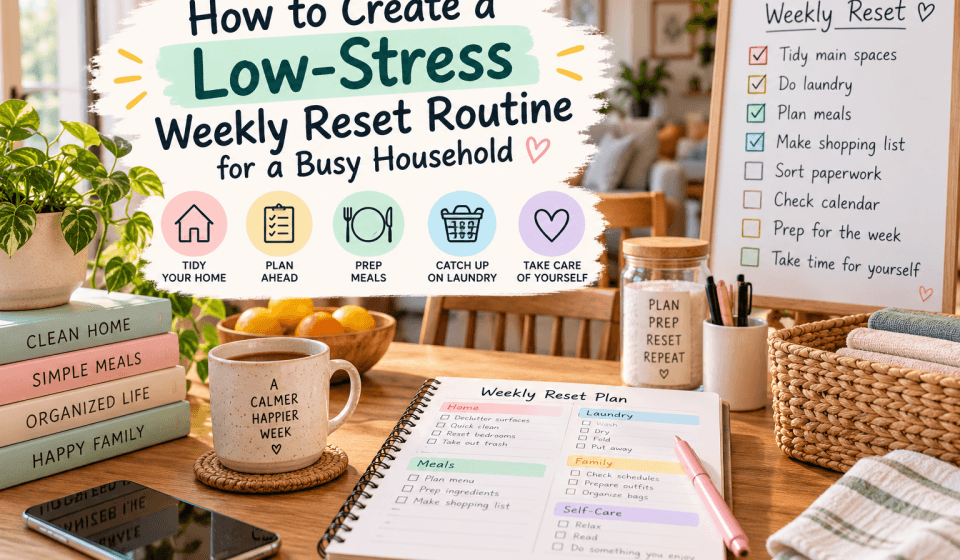

A busy household does not need a perfect cleaning schedule. It needs a simple way to pause, catch up on essentials, and make the next few days easier. A low-stress weekly reset routine can help you tidy the most important areas, plan meals and commitments, restock supplies, and give everyone a clear starting point for the week.
This guide shows you how to create a weekly reset that fits your real life. You will learn what to include, how to divide tasks, how to finish without exhausting yourself, and how to adjust the routine for children, shift workers, small homes, or unpredictable schedules.
What Is a Weekly Reset Routine?
A weekly reset is a short, repeatable block of time used to prepare your household for the week ahead. It is not a deep clean or a long list of chores. Instead, it focuses on the small tasks that create the most calm and reduce avoidable decisions later.
A useful reset often includes:
- Reviewing the family calendar and upcoming commitments
- Choosing a few simple meals and checking food supplies
- Resetting high-use rooms, such as the kitchen and entryway
- Doing essential laundry and changing bedding if needed
- Restocking household basics
- Preparing bags, clothing, school items, or work equipment
- Agreeing on who is responsible for which tasks
The goal is not to make every room look perfect. The goal is to remove friction from the days ahead.
How to Build a Low-Stress Weekly Reset Routine
1. Choose a realistic time window
Start by choosing a regular time when most household members are available and energy levels are reasonable. For many households, this might be Saturday morning, Sunday afternoon, or one evening during the week. The best time is the one you can repeat without resenting it.
Keep the first version between 45 and 90 minutes. If that feels too long, begin with 20 or 30 minutes. A shorter routine that happens consistently is more useful than an ambitious routine that is abandoned after two weeks.
It can also help to define a clear stopping time. When the time is up, stop or move only genuinely urgent tasks to another day. This prevents the reset from turning into an exhausting cleaning marathon.
2. Decide what “ready for the week” means
Every household has different pressure points. Before making a checklist, ask: What usually makes our week harder than it needs to be?
Your answer might be:
- No clean school or work clothes
- Empty lunch supplies
- A crowded kitchen counter
- Forgotten appointments
- Missing sports equipment
- Too many last-minute meals
- Unwashed towels or bedding
- A messy entrance that causes rushed mornings
Choose the tasks that address those problems first. If clean uniforms matter more than dusting the living room, uniforms belong in the weekly reset. A practical routine is based on household needs, not an idealized picture of a spotless home.
3. Use three simple categories
To keep the routine manageable, sort tasks into three categories:
- Must do: Tasks that prevent a problem this week, such as laundry, calendar checks, or medication refills.
- Helpful: Tasks that make the week smoother, such as chopping vegetables or clearing the refrigerator.
- Optional: Tasks that are nice to finish but can wait, such as organizing a drawer or cleaning windows.
On a difficult week, complete only the “must do” list. On a calmer week, add a few helpful tasks. This flexible structure keeps the routine from becoming another source of pressure.
A Practical Weekly Reset Checklist
Use the following checklist as a starting point. Remove anything that does not apply and add tasks that match your household.
Review the week ahead
- Check the shared calendar for appointments, school events, deadlines, and visitors.
- Note early starts, late finishes, travel time, and days when someone needs extra support.
- Confirm transport plans and who is responsible for pickups or drop-offs.
- Identify one or two busy days that need especially simple meals.
- Write down anything that must be purchased, returned, repaired, or communicated.
Keep this review brief. You are looking for potential problems before they become emergencies, not trying to plan every minute.
Plan simple meals
Choose meals based on the week you actually have. A busy evening is not the right time to schedule an elaborate recipe with many ingredients. Consider using a small mix of dependable options:
- One meal that can be cooked in a larger batch
- One quick meal that takes less than 20 minutes
- One flexible meal using leftovers or pantry ingredients
- One freezer meal or takeaway option for the most demanding day
- Easy breakfast and lunch components that can be prepared ahead
Check the refrigerator, freezer, and pantry before shopping. A short list based on what you already have reduces waste and prevents duplicate purchases. You do not need to prepare every meal in advance; simply making the next few food decisions easier can be enough.
Reset the high-traffic areas
Focus on places that affect the whole household. The kitchen, entrance, living room, and bathroom often deliver more benefit than rarely used rooms.
- Clear the kitchen counters and put away items that have accumulated.
- Load or empty the dishwasher and wipe the main food-preparation surfaces.
- Return shoes, bags, coats, and keys to their usual places.
- Collect cups, dishes, and rubbish from shared rooms.
- Restock toilet paper, soap, towels, and other frequently used supplies.
- Do a quick floor sweep in areas that collect the most dirt.
Use a basket for items that belong elsewhere. Rather than walking from room to room repeatedly, collect misplaced items and return them in one short trip at the end.
Prepare clothing and laundry
Look ahead at the clothing needs for the next several days. Wash the items that are difficult to replace, such as school uniforms, work clothes, sports kits, or specialist clothing.
You do not necessarily need to complete every load of laundry during the reset. The important thing is to prevent a predictable shortage. If folding is a problem, assign each person a basket or a clear surface where clean clothing can wait without becoming mixed up.
Restock and prepare essentials
Check the items that regularly cause last-minute trips or morning frustration. Depending on your household, this may include:
- Lunch containers and water bottles
- Pet food and medication
- Basic toiletries
- Cleaning products
- School or office supplies
- Chargers and batteries
- Reusable bags and travel cards
Create one running shopping list in a shared location. Anyone who notices that an item is running low can add it immediately, rather than relying on one person to remember everything.
How to Share the Work Fairly
A weekly reset works better when it is a household routine rather than one person’s invisible project. Assign tasks according to ability, age, availability, and preference. Fairness does not always mean everyone does the same task; it means the overall responsibility is visible and reasonably balanced.
Give each task a clear owner
Instead of saying “someone should deal with the laundry,” choose a person responsible for checking, starting, or putting away a particular load. Clear ownership prevents tasks from being assumed, forgotten, or repeatedly discussed.
For children, use short, concrete jobs such as:
- Putting shoes and bags away
- Collecting cups and dishes
- Checking their school supplies
- Filling pet bowls
- Matching socks or folding simple items
Young children may need help, while older children can manage a complete area. The purpose is not speed; it is building shared responsibility over time.
Make the routine visible
Use a whiteboard, paper checklist, shared calendar, or household app. A visible list reduces repeated reminders and makes unfinished tasks easier to spot. Keep it simple enough that everyone can understand it at a glance.
Consider using a “done” column rather than constantly asking whether something has been completed. This creates a clear record without turning the reset into a series of verbal check-ins.
Ways to Keep the Reset Low-Stress
Use a timer and work in short rounds
Try two or three 15-minute rounds with a short break between them. During each round, choose one area or category. For example, the first round can cover the kitchen, the second can cover laundry, and the third can cover planning and supplies.
A timer provides a boundary and discourages perfectionism. When the timer ends, move on even if the area is not flawless.
Lower the standard on busy weeks
Your routine should have a minimum version. For example:
- Check the calendar
- Choose three easy dinners
- Wash essential clothing
- Clear the kitchen sink and main counter
- Restock one or two urgent items
This “minimum viable reset” may take only 20 minutes. It keeps the household moving when work, illness, travel, or unexpected events disrupt the usual plan.
Pair preparation with something pleasant
Play music, listen to a podcast, make a favorite drink, or plan a simple reward for finishing. The reset should feel like a transition into a calmer week, not a punishment for having a busy home.
However, do not use entertainment to push through exhaustion. If everyone is depleted, choose only the essentials and rest.
End with a small reset for yourself
Finish by preparing one thing that supports your own week. Set out clothes, fill a water bottle, organize your work bag, write down a priority, or protect a quiet hour on the calendar. Household planning is more sustainable when the person coordinating it is included in the plan.
Common Weekly Reset Mistakes
Trying to clean the entire home
Deep cleaning belongs in a separate schedule, if it belongs at all. Combining it with weekly planning makes the reset too long and discourages regular use. Focus on visible clutter, essential hygiene, and high-impact areas.
Creating a checklist that is too detailed
A list with dozens of tiny tasks can make a routine feel like another job. Group related tasks and keep only the actions that genuinely improve the coming week.
Planning meals that ignore energy levels
A meal plan fails when it assumes every evening will be calm. Match food preparation to the day’s demands and include convenient options without guilt.
Making one person responsible for everything
One person may coordinate the reset, but coordination is still work. Share both the physical tasks and the mental load of noticing, planning, and remembering.
Never reviewing the routine
After two or three weeks, ask what helped and what felt unnecessary. Remove tasks that do not matter, move tasks to a better day, and add solutions for repeated problems. Your routine should evolve with school terms, work patterns, seasons, and household changes.
Frequently Asked Questions
How long should a weekly reset routine take?
A useful reset can take anywhere from 20 minutes to 90 minutes. Start with the smallest version that addresses your household’s main problems. If the routine regularly takes much longer, reduce the list or separate deep-cleaning tasks from weekly preparation.
What if my household has no shared free time?
Use a rolling reset. One person can check the calendar, another can handle groceries, and someone else can reset the entryway at a different time. A shared checklist or message thread can keep everyone informed without requiring one large group session.
Should a weekly reset include deep cleaning?
Usually, no. Include quick cleaning in areas that need it for the week to function, such as the kitchen or bathroom. Save detailed cleaning for occasional sessions, hire help if it fits your budget, or decide that some tasks can wait.
How can I involve children without making the routine chaotic?
Give children one or two predictable jobs with clear limits. Use a picture checklist for younger children and avoid assigning tasks that require constant supervision. As they gain confidence, increase responsibility gradually.
What should I do if I miss the reset?
Do not try to catch up on everything. Complete the minimum version: check the calendar, choose easy meals, handle urgent laundry, and clear the most important surface. Then return to the normal routine at the next suitable time.
Make the Routine Support Your Household
The best weekly reset routine is not the most thorough one. It is the one that reduces repeated stress without consuming all your free time. Start with the few tasks that make mornings, meals, and transitions easier. Give responsibilities clear owners, keep a shorter backup version, and review the routine as your household changes.
With a little planning, the reset becomes less about catching up and more about creating a calmer launch into the week ahead.