
A small entryway has to do a lot with very little space. It may need to hold coats, shoes, bags, keys, mail, and everyday accessories while still leaving enough room to open the door comfortably. The good news is that you can organize a small entryway without bulky furniture by using vertical wall space, narrow storage, and simple routines that keep clutter from collecting.
This guide explains how to create a practical drop zone without adding a large console, cabinet, or coat rack. You’ll learn how to measure the space, choose compact storage, control shoes and bags, make use of the door, and avoid the common organizing mistakes that make a small entrance feel even tighter.
Start by Defining What Your Entryway Actually Needs
Before buying organizers, observe what usually ends up near the door. The most effective setup is based on your household’s real habits, not on an idealized entryway.
For several days, note which items need a permanent home near the entrance. Common examples include:
- Keys, sunglasses, and wallets
- Coats, hats, scarves, and umbrellas
- Daily shoes
- Work bags, backpacks, and handbags
- Dog leashes or outdoor accessories
- Mail, packages, and items that need to leave the house
Separate everyday items from occasional ones. A winter coat does not need to occupy the most convenient hook in summer, and formal shoes do not need to stay in the entryway if they are worn only a few times a year.
Keeping only frequently used items near the door prevents a small space from becoming overloaded. Store seasonal clothing, extra shoes, and travel accessories elsewhere, then rotate them when needed.
How to Organize a Small Entryway Without Bulky Furniture
The best approach is to build a series of small storage zones rather than add one large piece of furniture. Think vertically and assign each zone a specific job: hanging, dropping, storing, and leaving.
Use the wall above the floor
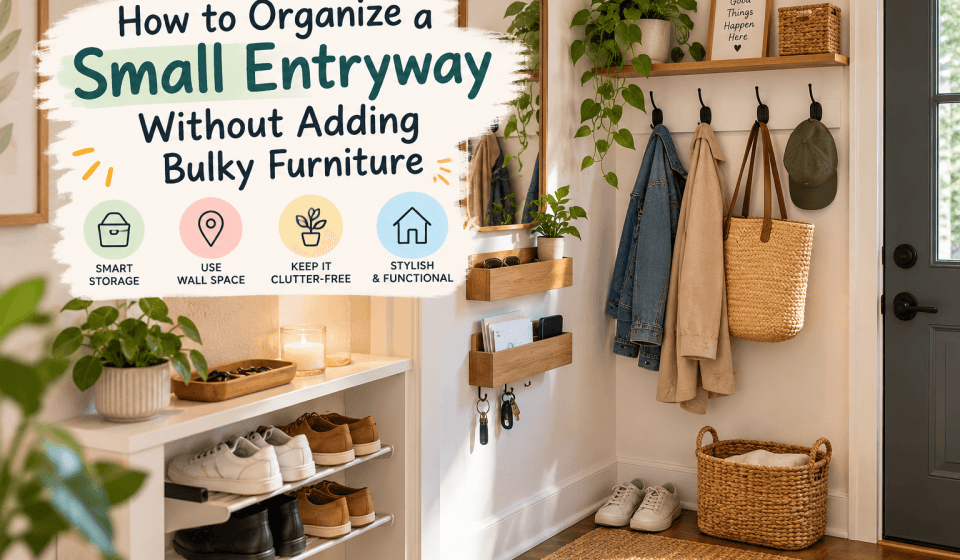
Wall-mounted storage keeps the floor open, which helps the entryway feel less crowded and makes cleaning easier. A few well-placed hooks can handle coats and bags without taking up the depth of a freestanding coat rack.
Consider a combination of:
- Two or three sturdy hooks for daily coats and bags
- A narrow shelf for lightweight items or decorative storage boxes
- A small peg rail for flexible hanging space
- A wall-mounted key holder with a mail slot
Install hooks at a comfortable height for the people who use them. If children need to hang their own jackets, add a lower row of hooks rather than expecting them to reach an adult-height rail.
Avoid covering every inch of wall with hooks. Too many available spots can encourage the entryway to become a storage area for every coat and bag in the home. Give each person a reasonable amount of space and keep extra items elsewhere.
Choose slim storage instead of deep storage
If you need enclosed storage, look for a narrow shoe cabinet, shallow wall cabinet, or slim shelving unit. Measure the available depth carefully, including space needed for the door to open and for people to walk past it.
As a general planning rule, use the shallowest storage that can hold the items you actually keep by the entrance. Deep bins often seem useful, but they can make it difficult to see what is inside and may create a bulky obstruction in a narrow passage.
For a very tight entryway, a wall-mounted shoe organizer or vertical shoe rack may work better than a traditional bench with cubbies. Choose one with ventilation if it will hold footwear regularly.
Create a Small Drop Zone for Everyday Essentials
Loose keys, receipts, sunglasses, and mail can make even a tidy entryway look chaotic. A small drop zone gives these items a clear destination.
Use a tray or shallow wall shelf
A shallow tray placed on a shelf can contain small objects without requiring a full console table. Choose a tray with a raised edge so keys and coins do not slide off.
If there is no suitable surface, install a narrow shelf or small wall pocket. Keep it limited to items that are used daily. The goal is not to create a general-purpose storage shelf; it is to make the act of putting things away quick and obvious.
Add a dedicated place for mail
Mail is easier to control when it does not compete with keys and personal items. Use one wall-mounted letter holder or a slim basket labeled “to sort.” Empty it on a regular schedule so it does not become a permanent pile.
Keep outgoing mail, returns, and items to take with you in separate sections if possible. A simple three-part system can include:
- Incoming: unopened mail that still needs attention
- Action: bills, forms, or returns that require a task
- Leaving: items that should go out on the next trip
Only use categories that match your routine. Too many compartments can make a simple system harder to maintain.
Control Shoes Without Adding a Bench
Shoes are often the biggest source of entryway clutter. Instead of storing every pair near the door, choose a limit for daily footwear and move the rest to bedroom closets or another storage area.
Useful small-space options include:
- A vertical shoe rack that uses height rather than width
- A slim cabinet with tilting compartments
- A boot tray for wet or muddy footwear
- One labeled basket for slippers or children’s shoes
- Under-shelf shoe storage if a shelf is already installed
Keep the shoe area close to the entrance but outside the main walking path. A narrow tray is especially useful in rainy or snowy weather because it protects the floor and defines where damp shoes belong.
Do not place shoes in a deep, uncovered basket unless you are comfortable searching through it. A visible rack or divided compartments make it easier to find pairs and notice when the area needs attention.
Make the Door and Nearby Spaces Work Harder
When floor space is limited, the entry door and nearby walls can provide valuable storage. An over-the-door organizer can hold gloves, hats, scarves, small umbrellas, or pet supplies. Choose a low-profile model that does not interfere with the door frame or latch.
You can also use the back of a closet door for less attractive but useful items, such as lint rollers, reusable shopping bags, or shoe-care supplies. This keeps them accessible without making the main entrance look crowded.
If your entryway opens into a hallway, consider extending the storage zone slightly beyond the immediate doorway. A hook a few feet away or a shallow shelf around the corner may provide more room without obstructing the entrance.
Use Flexible Organizers for Bags, Coats, and Accessories
Bags and coats take up more visual space than small accessories, so they need a clear hanging strategy. Assign each household member one or two hooks, depending on the size of the household and the available wall area.
For bags, use sturdy hooks rather than lightweight decorative hooks that may pull loose. If a bag is heavy, install the hook into a stud or use hardware rated for the wall type and expected load.
Scarves, hats, and gloves can be grouped in a small fabric bin or wire basket. Avoid a large open basket if it encourages everyone to toss in unrelated items. A smaller container creates a natural limit.
For children, place hooks and baskets at their height. A system they can reach is more likely to be used consistently. Picture labels or simple words can make the arrangement easier for younger children to follow.
Improve a Tiny Entryway With Visual Simplicity
Good organization is not only about capacity. The entryway will feel more spacious when storage looks intentional and surfaces are easy to see.
- Choose one finish or color family for visible hooks, shelves, and containers.
- Use matching or coordinated baskets to reduce visual noise.
- Keep the floor as clear as possible.
- Leave some empty wall space instead of filling every area.
- Use a mirror only if it does not replace needed storage or make the area feel crowded.
Labels can help, especially for shared baskets, but they are not always necessary. In a small home, clear containers may be more useful for accessories, while opaque containers can hide visual clutter.
Build a Routine That Keeps the Space Organized
Even the best storage system will fail if it requires too many steps. Make the preferred action easier than dropping items on the floor or a nearby chair.
Try a short daily reset:
- Return keys and small items to the drop zone.
- Hang coats and bags on their assigned hooks.
- Pair shoes and place them in the shoe area.
- Move mail into the correct category.
- Remove anything that does not belong near the door.
Once a week, check for items that have accumulated. Remove worn-out shoes, relocate seasonal accessories, and empty the outgoing or action basket. A small entryway stays manageable when clutter is removed before it becomes a large sorting project.
Common Small-Entryway Organizing Mistakes
Buying furniture before measuring
A cabinet that looks compact in a shop may block the walkway or make the door difficult to open. Measure the wall, available depth, door swing, and walking clearance first. Mark the proposed footprint with painter’s tape so you can test how it feels.
Trying to store everything by the door
The entryway should support daily departures, not serve as the home’s only storage room. Keep only the items that are used regularly or need to leave soon.
Using attractive but impractical containers
A lidded box may look neat, but it can discourage quick storage if you must open it every time. Choose open bins for frequently used items and closed containers for seasonal or occasional belongings.
Ignoring wall strength and installation
Coats and bags can be surprisingly heavy. Use appropriate anchors, screws, and mounting methods. For a loaded shelf or heavily used peg rail, secure it to wall studs whenever possible.
FAQ About Organizing a Small Entryway
What should I do if I have no entryway at all?
Create a compact drop zone just inside the main door or on the nearest available wall. A few hooks, a narrow shelf, and a small shoe tray can define the area without needing a separate room.
How many shoes should stay near the front door?
Keep the pairs used most often, usually one or two pairs per person, plus weather-appropriate footwear. Move formal, seasonal, and rarely worn shoes to another storage location.
Are wall hooks better than a coat rack in a small space?
Usually, yes. Wall hooks use vertical space and leave more floor area open. A compact coat rack can still work if you rent or cannot drill, but choose a narrow model and limit what hangs on it.
How can I organize a small entryway on a budget?
Start with inexpensive adhesive or screw-in hooks, a small tray, a recycled box for mail, and a shoe mat. Add storage gradually after observing what actually causes clutter. This prevents spending money on organizers you will not use.
What is the most important rule for a tiny entrance?
Give every frequently used item a visible, convenient home and keep the number of items limited. In a small space, reducing what must be stored is just as important as choosing better storage.
Final Thoughts
To organize a small entryway without bulky furniture, focus on a few efficient zones instead of trying to fit a full hallway setup into a narrow space. Use the walls, keep storage shallow, control the number of shoes and coats, and create a simple drop zone for daily essentials.
Measure before installing anything, choose organizers that match your habits, and maintain the area with a quick reset. A small entrance does not need more furniture; it needs clear limits, convenient storage, and a system that is easy to use every day.