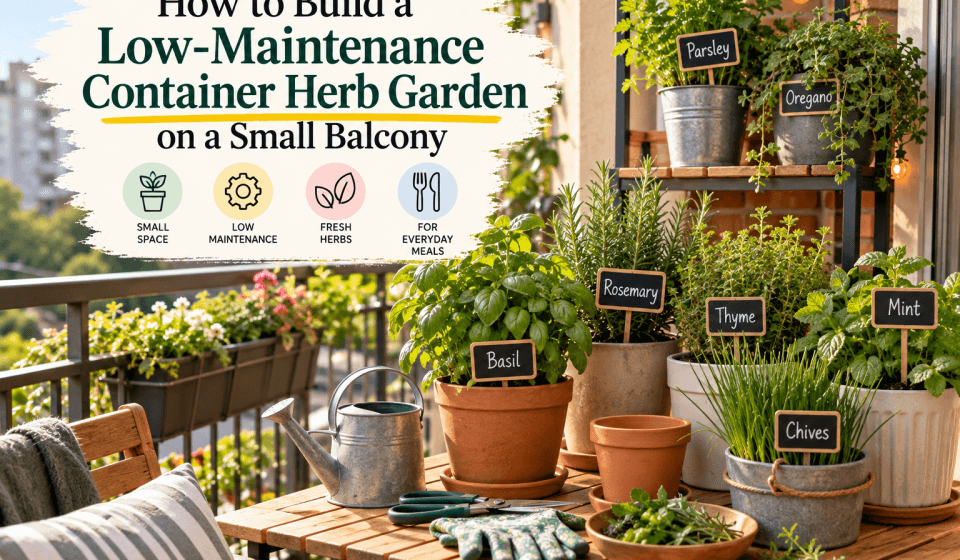

A low-maintenance container herb garden can turn even a narrow balcony into a practical source of fresh flavor. With the right herbs, containers, potting mix, and watering routine, you can grow useful plants without spending hours every week tending them. This guide explains how to choose a suitable spot, build a space-saving setup, select forgiving herbs, and keep everything healthy with minimal effort.
Plan Your Low-Maintenance Container Herb Garden
The easiest balcony herb garden is designed around the conditions you already have. Before buying plants or pots, check three things: sunlight, available space, and how much weight your balcony can safely support.
Check the sunlight
Most culinary herbs grow best with at least six hours of direct sunlight daily, although some tolerate less. Watch your balcony throughout the day rather than relying only on its direction. Nearby buildings, railings, trees, and overhangs can create shade.
- Full sun: Choose rosemary, thyme, oregano, sage, basil, chives, and dill.
- Partial sun: Try parsley, mint, cilantro, chives, and lemon balm.
- Mostly shade: Parsley, mint, and chives are usually more dependable than sun-loving Mediterranean herbs.
If your balcony receives strong afternoon sun, pots may dry out quickly. In that case, use slightly larger containers, place plants where they receive morning sun when possible, and check moisture more often during hot weather.
Consider weight and access
Containers filled with damp soil can be surprisingly heavy. Keep larger pots on the balcony floor rather than hanging them from railings unless the railing system is specifically designed to support planters. Use lightweight plastic, resin, or fabric pots if weight is a concern.
Place the garden where you can easily reach it from indoors. A setup that requires moving furniture or climbing over other pots is less likely to receive regular care. Leave enough space to water without spilling onto the balcony below.
Choose Herbs That Forgive Occasional Neglect
The best plants for a low-maintenance container herb garden are compact, productive, and reasonably tolerant of missed watering. Start with three to five herbs rather than trying to grow everything at once.
Reliable choices for beginners
- Thyme: Compact, drought-tolerant once established, and well suited to smaller pots.
- Oregano: Productive and adaptable, with stems that can spill over the edge of a container.
- Chives: Hardy, attractive, and useful in salads, eggs, soups, and baked potatoes.
- Parsley: Productive in containers and suitable for partial sun, especially in mild weather.
- Rosemary: A good choice for sunny balconies with excellent drainage and a pot large enough for its roots.
- Sage: Relatively easy in a sunny, dryish container and useful in savory cooking.
- Mint: Vigorous and forgiving, but it should always have its own pot because it spreads aggressively.
Basil grows quickly and is very useful, but it needs more consistent moisture and warmth than thyme or oregano. Cilantro is convenient for cooking but tends to flower quickly in hot weather. Treat both as seasonal crops rather than permanent plants.
Use the Right Containers and Potting Mix
Container choice affects watering, root health, and how often you need to repot. Every pot should have one or more drainage holes. Decorative containers without drainage can collect water around the roots and cause rot.
Match the pot to the herb
- Use a pot at least 15–20 centimeters wide for thyme, chives, parsley, or oregano.
- Give rosemary, sage, and mint a container around 25–30 centimeters wide or larger.
- Use a long window box for several shallow-rooted herbs, but avoid overcrowding.
- Plant mint by itself so its roots do not take over neighboring herbs.
A larger pot usually dries out more slowly than a tiny one. However, oversized containers hold extra wet soil, which can be a problem for small plants. Choose a container that gives the herb room to grow without leaving a large amount of unused soil around its roots.
Select a light, well-draining mix
Use a quality potting mix made for containers rather than garden soil. Outdoor soil is often too dense for pots and may drain poorly. A general-purpose potting mix with added perlite, pumice, or coarse material can improve drainage.
Herbs do not need rich, heavily fertilized soil to produce useful leaves. Excess fertilizer can encourage soft, weak growth and reduce the concentrated flavor that many people enjoy in culinary herbs. If the mix contains slow-release fertilizer, you may not need to feed for several weeks.
Build a Space-Saving Balcony Setup
A small balcony does not require a large collection of individual pots. Arrange plants according to their watering and sunlight needs so care remains simple.
Group plants with similar needs
Place rosemary, thyme, oregano, and sage together in the sunniest, driest area. Group parsley, basil, chives, and cilantro where they can receive regular moisture. Keep mint separate even if it has similar light requirements.
This arrangement prevents a common problem: watering every plant on the same schedule even though some prefer to dry slightly between waterings while others wilt quickly.
Make use of vertical space
- Use a narrow plant stand to create two or three levels.
- Install a secure wall-mounted shelf only where building rules allow it.
- Choose railing planters designed for the specific railing style, and secure them against wind.
- Use a long, narrow trough instead of several round pots when floor space is limited.
- Grow trailing oregano or thyme near the edge to make use of vertical space.
Keep heavy containers low and avoid placing loose objects where strong wind could move them. A balcony garden should be stable, accessible, and safe for people below as well as for the plants.
Watering Without Constant Work
Overwatering is often a bigger threat than underwatering. Instead of watering automatically every day, check the soil first. Push a finger about two to three centimeters into the potting mix. If it feels dry at that depth, water thoroughly. If it still feels damp, wait and check again later.
When watering, apply it slowly until a little runs from the drainage holes. This helps moisten the full root area rather than only the surface. Empty saucers after heavy watering so pots do not sit in standing water.
Reduce how often you need to water
- Choose medium or large containers instead of very small pots.
- Add a thin layer of mulch, such as fine bark or untreated coconut fiber, to the soil surface.
- Move plants out of intense afternoon heat during heat waves if practical.
- Use self-watering containers for moisture-loving herbs such as basil and parsley.
- Water in the morning when possible, allowing leaves and surfaces to dry during the day.
Self-watering planters can be helpful, but they are not maintenance-free. Check the reservoir, clean it occasionally, and make sure the growing mix is suitable for that type of container. Mediterranean herbs such as rosemary and thyme generally prefer ordinary pots with excellent drainage rather than constantly damp roots.
Simple Ongoing Care
Once your plants are established, a few small habits keep the garden productive.
Harvest regularly
Harvesting encourages many herbs to produce fresh growth. Snip basil just above a pair of leaves, cut chives near the base, and take only a few stems at a time from woody herbs such as rosemary and sage. Avoid removing more than about one-third of a plant at once.
Pick herbs in the morning after dew has dried but before the strongest heat of the day. Use clean scissors or pruners to avoid crushing stems.
Prune and remove flowers
Trim leggy stems to keep plants compact. Pinch basil flower buds promptly if you want more leaves, because flowering can make the plant focus less on leafy growth. Let chives flower if you enjoy their blooms, but remove spent flower heads if you want to limit reseeding.
Rosemary, thyme, oregano, and sage benefit from light trimming, but avoid cutting deeply into old, bare wood. Leave some green growth on each stem so the plant can recover.
Feed sparingly
Container plants eventually use up nutrients because their roots cannot spread into surrounding soil. Feed during active growth with a diluted, balanced fertilizer according to the product instructions. Once every few weeks may be enough for vigorous herbs, while slow-growing rosemary and thyme may need less.
Do not fertilize a severely dry or wilted plant. Water it first and wait until it has recovered.
Seasonal and Weather Considerations
Balconies can be hotter, windier, and more exposed than ground-level gardens. Wind increases moisture loss and can damage tall stems. Move fragile plants near a wall, use a windbreak where permitted, and avoid placing lightweight pots in exposed corners.
During a heat wave, check plants early in the morning and again later if they are in small containers. During cold weather, protect tender herbs such as basil or bring them indoors if they have adequate light. Rosemary, sage, thyme, and chives may tolerate cooler conditions, but hard freezes can still damage them depending on the variety and local climate.
Common Mistakes to Avoid
- Using pots without drainage: This creates waterlogged soil and unhealthy roots.
- Planting mint with other herbs: Mint can quickly crowd out its neighbors.
- Choosing herbs without checking sunlight: Shade-loving and sun-loving plants should not be treated the same way.
- Using tiny containers: Small pots dry out quickly and require frequent watering.
- Overcrowding seedlings: Crowded plants compete for light and air circulation.
- Watering by calendar: Weather, pot size, and plant type change how often watering is needed.
- Ignoring balcony safety: Secure planters and consider the weight of wet soil before arranging them.
A Practical Starter Combination
For a sunny balcony, begin with thyme, oregano, chives, and rosemary. Use separate pots, place the rosemary in the largest container, and group the other sun-loving herbs nearby. Add basil if you are willing to check moisture more often.
For a balcony with partial sun, choose parsley, chives, mint, and cilantro. Keep mint in its own pot and sow cilantro in small batches so you can replace plants after they flower. This small collection provides variety without creating a complicated care schedule.
Frequently Asked Questions
What is the easiest herb to grow on a balcony?
Chives, thyme, oregano, and mint are among the easiest choices. Mint is especially forgiving, but it must be grown alone because it spreads quickly.
How often should balcony herbs be watered?
There is no single schedule. Check the top two to three centimeters of soil and water when that area is dry. Small pots and hot, windy balconies may need water more often than larger containers in sheltered spots.
Can different herbs share one container?
Yes, if they have similar light, moisture, and soil preferences. Thyme, oregano, and sage can work together in a sunny, well-drained container. Avoid pairing rosemary with herbs that need consistently moist soil.
Should herbs be grown from seed or bought as plants?
Buying young plants is the quickest and simplest option for a first garden. Seeds are economical and useful for basil, cilantro, dill, and chives, but they require more attention while germinating.
How can I keep a balcony herb garden low-maintenance while traveling?
Use larger containers, group plants by watering needs, move them out of harsh afternoon sun, and ask someone to check soil moisture during extended absences. A self-watering planter can help with basil or parsley, but it should be tested before you rely on it.