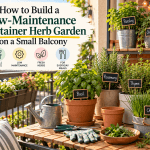
Growing a low-maintenance herb garden on a shaded apartment balcony is possible, even if you do not receive hours of bright sunshine. The key is to understand how much light your balcony actually gets, choose herbs that tolerate lower light, and use containers and watering methods that reduce daily upkeep. This guide explains which herbs to grow, how to arrange them, how to avoid common problems, and how to keep your balcony garden productive with minimal effort.
Start by Measuring Your Balcony’s Light
“Shaded” can mean several different things. Before buying plants, observe your balcony on a clear day and note how many hours of direct sunlight reach the growing area.
- Bright shade: The balcony receives strong indirect light and perhaps one to three hours of direct sun.
- Partial shade: The space gets roughly three to six hours of sunlight, often in the morning or late afternoon.
- Deep shade: The area receives little or no direct sunlight and may be blocked by nearby buildings, walls, or trees.
Most culinary herbs grow best with several hours of sun, but some tolerate bright indirect light. If your balcony is deeply shaded, herbs may grow slowly and produce less flavorful foliage. In that situation, place containers in the brightest spot available, or consider a small grow light near a window or covered outdoor outlet.
Track the light in spring or early summer, when you are most likely to use the garden. Light can change significantly as the sun’s position shifts through the year.
Best Herbs for a Low-Maintenance Herb Garden on a Shaded Apartment Balcony
Choose herbs based on your actual light conditions rather than planting a long list of sun-loving varieties. The following options are generally more forgiving in bright shade or partial shade.
Mint
Mint is vigorous, leafy, and tolerant of less-than-perfect conditions. It prefers consistently moist soil and usually handles morning sun or bright shade well. Always grow mint in its own container because its roots spread aggressively and can crowd other plants.
Parsley
Flat-leaf and curly parsley can grow in partial shade and are useful in soups, salads, sauces, and grain dishes. Parsley is a good choice for a balcony because it stays relatively compact and can be harvested a little at a time.
Chives
Chives tolerate partial shade and provide useful harvests in a small pot. Their grass-like leaves regrow after cutting, and their purple flowers are attractive to pollinators when allowed to bloom. Keep the soil lightly moist, especially during hot weather.
Cilantro
Cilantro appreciates cooler conditions and some afternoon shade. It can bolt quickly in hot, sunny locations, so a shaded balcony may extend its useful harvest. Sow seeds every few weeks rather than relying on one large planting, since individual plants have a relatively short productive period.
Lemon balm
Lemon balm grows well in partial shade and has fragrant leaves suitable for teas, fruit dishes, and cold drinks. Like mint, it can spread quickly, so keep it in a separate pot and cut it back regularly.
Thyme and oregano
These Mediterranean herbs prefer more sun and drier conditions, but they may succeed if your balcony receives several hours of direct light. Use a gritty, well-draining potting mix and avoid watering them as frequently as moisture-loving herbs.
Basil, rosemary, lavender, and sage generally need more sun and heat. They can be worth trying on a bright partial-shade balcony, but they are less dependable in deep shade. If basil becomes tall, pale, or weak, it probably needs more light.
Choose Containers That Make Care Easier
The right container can prevent many of the problems that make balcony gardening frustrating. Every pot should have drainage holes so excess water can escape. A decorative outer pot can be used as a cover, but do not leave the growing container sitting in a saucer full of water.
- Use medium-sized pots: Containers about 15 to 25 centimetres wide work well for many individual herbs. Larger pots hold moisture longer but are heavier and harder to move.
- Choose lightweight materials: Plastic, resin, and fabric pots are easier to lift than terracotta or ceramic, which matters on an apartment balcony.
- Use window boxes carefully: Long planters are useful for parsley, chives, and cilantro, but avoid overcrowding them.
- Check the balcony rules: Some buildings restrict hanging planters, railing boxes, or the weight placed on balconies.
- Secure containers: Wind can tip lightweight pots. Place them against a wall or use stable, approved brackets rather than balancing them on railings.
Do not put a large pot directly over a drain or allow water to drip onto the balcony below. A tray can catch small amounts of runoff, but it should be emptied after watering.
Use the Right Soil and Planting Layout
Use a quality container potting mix instead of garden soil. Outdoor soil is often too dense for pots and can restrict drainage. A standard mix containing compost or other organic material is suitable for parsley, mint, chives, cilantro, and lemon balm.
For thyme, oregano, and other herbs that prefer drier roots, mix in extra perlite, pumice, or coarse horticultural grit. The goal is a light mix that drains quickly while still holding enough moisture for the plant to use.
Group herbs by their watering needs. Place mint, parsley, chives, and cilantro together, since they prefer more even moisture. Keep thyme and oregano in a separate, drier container. This simple arrangement makes watering more efficient and reduces the risk of overwatering drought-tolerant herbs.
Give each plant enough room for air to circulate. Crowded foliage stays damp longer and is more likely to develop mildew or other fungal problems, especially in a shaded location.
Plant for Reliable, Low-Effort Harvests
Buying small, healthy plants is often the easiest starting point for an apartment herb garden. Look for compact plants with firm stems, evenly colored leaves, and no obvious insects or webbing. Seeds are less expensive and work especially well for cilantro, parsley, and chives, but they require more patience.
After planting, water thoroughly until moisture runs from the drainage holes. This settles the roots and removes dry pockets in the potting mix. Allow the top layer of soil to dry slightly before watering again, unless the plant prefers consistently moist conditions.
Harvest little and often once plants are established. Snip parsley and chives from the outside of the plant, cut mint and lemon balm just above a pair of leaves, and pinch cilantro leaves close to the base. Regular harvesting encourages useful new growth, but never remove most of the foliage at once.
For leafy herbs, harvest in the morning when the leaves are firm. Use them fresh, or dry small amounts of thyme and oregano in a warm, well-ventilated place.
Make Watering Simple
Shade does not mean a container cannot dry out. Wind, warm walls, small pots, and summer temperatures can remove moisture quickly. At the same time, shaded soil dries more slowly than soil in full sun, so watering on a fixed daily schedule can lead to soggy roots.
Check the soil with your finger. If the top two to three centimetres feel dry, water most leafy herbs thoroughly. If the surface is still damp, wait and check again the next day. Water at the soil line rather than over the leaves.
To reduce maintenance:
- Use a larger container where appropriate because it holds moisture longer.
- Add a thin layer of compost to the surface at the beginning of the growing season.
- Group pots together so they are less exposed to drying wind.
- Use a self-watering container for parsley, mint, or chives if you frequently forget to water.
- Move pots away from hot walls during heatwaves and check them more often in windy weather.
Self-watering containers are not a cure for poor drainage. Make sure the reservoir and overflow system work correctly, and do not use one for herbs that prefer dry soil unless you can control the moisture level.
Feed Herbs Lightly and Watch for Problems
Most herbs do not need heavy feeding. Too much fertilizer can produce fast, soft growth with less concentrated flavor. If you used a good potting mix, apply a balanced liquid fertilizer at half strength once every four to six weeks during active growth, following the product label.
Slow growth is common in shade, so avoid responding with extra fertilizer before checking the light. Pale, stretched stems usually indicate insufficient light rather than a nutrient shortage.
Inspect plants once a week for aphids, whiteflies, spider mites, and signs of mildew. Small infestations can often be managed by rinsing leaves with water or wiping affected areas gently. Improve air movement by spacing pots apart and removing damaged leaves. Avoid spraying anything on edible herbs unless the product is specifically labelled for food crops, and follow its harvest instructions.
Common Mistakes to Avoid
- Growing only sun-loving herbs: Rosemary, lavender, and basil may struggle in a dark location.
- Overwatering because the balcony is shaded: Check the soil instead of watering automatically.
- Using pots without drainage: Standing water can quickly damage roots.
- Planting mint with other herbs: Mint is easier to control in its own container.
- Overcrowding seedlings: Dense growth reduces airflow and makes harvesting difficult.
- Ignoring wind: Secure pots and protect delicate stems near exposed balcony edges.
- Letting cilantro flower without replanting: Sow a second batch before the first one finishes for a steadier supply.
A Simple Balcony Herb Setup
For a beginner, start with three or four containers rather than filling the entire balcony. A practical setup could include one pot of mint, one window box containing parsley and chives, one pot of cilantro, and one container of thyme or oregano if the space receives several hours of sun.
Place the moisture-loving herbs in the brightest sheltered area, with the mint set apart. Put thyme or oregano in the sunniest and driest position. This small arrangement provides variety without creating a complicated watering routine.
As the seasons change, rotate containers toward the light. In colder climates, bring tender herbs indoors before the first frost if you have a bright window. Hardy chives, mint, and parsley may survive outdoors depending on the local climate and the protection provided by the building.
Frequently Asked Questions
What herbs grow best on a shaded apartment balcony?
Parsley, mint, chives, cilantro, and lemon balm are among the most suitable choices for bright shade or partial shade. Thyme and oregano can work where there is some direct sun, while basil and rosemary usually need brighter conditions.
How much sunlight do balcony herbs need?
Many herbs grow best with several hours of direct sun, but parsley, mint, chives, and cilantro can tolerate bright indirect light or partial shade. In deep shade, growth may be slow and a grow light may be necessary.
Can herbs grow in full shade?
Some may survive, but very few culinary herbs thrive in deep shade. Plants may become thin, pale, and less productive. Use the brightest available location and consider supplemental light if there is almost no direct or strong indirect light.
How often should shaded balcony herbs be watered?
There is no universal schedule. Check the top few centimetres of soil and water when they begin to dry. Leafy herbs usually need more consistent moisture, while thyme and oregano should dry more between waterings.
Should different herbs share one container?
Only combine herbs with similar light and watering needs. Parsley and chives can share a planter, but mint should usually have its own pot. Avoid placing moisture-loving herbs with thyme or oregano.