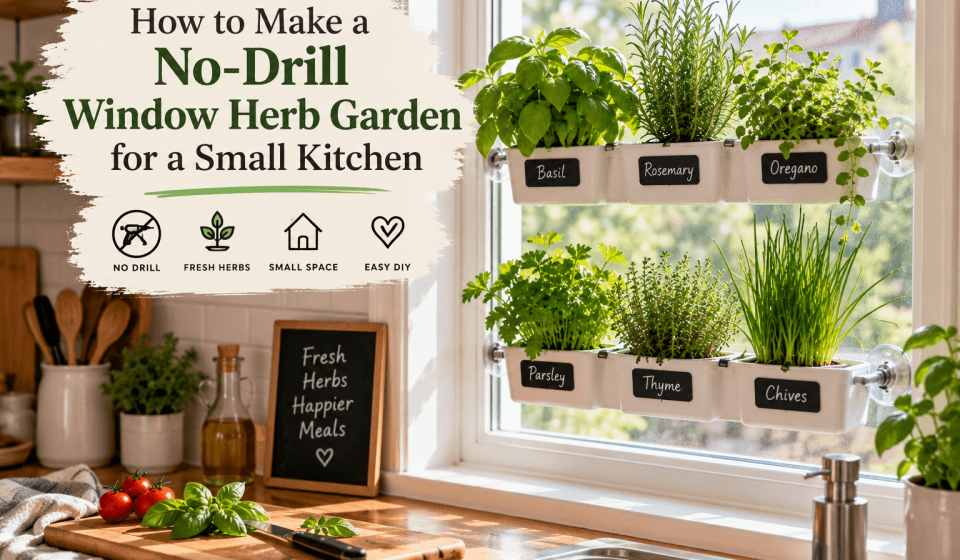

A no-drill window herb garden is an easy way to grow fresh flavor in a small kitchen without damaging walls, tile, or window frames. The best setup uses a sunny windowsill, removable hooks, tension hardware, suction cups, or a freestanding shelf to hold lightweight pots securely. In this guide, you’ll learn how to choose the right window, pick suitable herbs and containers, build a stable arrangement, and keep the plants healthy in a compact space.
How to Choose the Best Window for a No-Drill Herb Garden
Most culinary herbs need plenty of bright light, so start by assessing your available windows before buying supplies. A south-facing window usually provides the strongest light, while east-facing windows offer gentle morning sun. West-facing windows can work well too, although intense afternoon heat may require a sheer curtain. North-facing windows are often too dim for many herbs unless you add a small grow light.
Look for a window that is:
- Close to where you cook, so harvesting is convenient.
- Bright for several hours each day.
- Far enough from a radiator, stovetop, or heating vent to avoid temperature swings.
- Wide enough to support containers without blocking the window’s operation.
- Easy to reach for watering, pruning, and cleaning.
Check whether the window opens inward, slides vertically, or tilts for ventilation. Avoid placing pots where they could prevent an emergency exit or interfere with blinds and curtains.
Choose a No-Drill Setup That Fits Your Kitchen
The right support depends on your window style, available space, and whether you rent your home. Keep the containers light, and always test the support before adding wet soil and mature plants. Moist potting mix is much heavier than an empty pot.
1. A simple windowsill arrangement
If you have even a narrow sill, this is the easiest option. Use small pots, rectangular troughs, or compact self-watering planters that sit fully on the surface. Place a waterproof tray underneath to catch drips and protect painted wood or stone.
For a very shallow sill, choose pots that are wider than they are deep, or use two or three small containers instead of one long planter. This makes the garden easier to move and reduces the risk of overloading one area.
2. A tension-rod plant shelf
A tension rod designed for curtains or shower spaces can support a lightweight hanging shelf inside a window recess. Select a rod rated for more weight than you plan to add, and use a shelf or basket that distributes weight across the rod rather than concentrating it at one point.
Install the rod according to the manufacturer’s instructions and press it firmly against sturdy side surfaces. Do not rely on a loose rod to hold glass containers or heavy ceramic pots. A lightweight plastic or fabric-lined basket is safer.
3. Removable adhesive hooks
Adhesive hooks can hold small hanging planters, narrow rails, or lightweight baskets without drilling. Use hooks intended for the expected load, apply them to clean, dry surfaces, and allow the adhesive to bond for the recommended time before hanging anything.
Adhesive products work best on smooth, sound surfaces. They may fail on dusty, damp, textured, freshly painted, or weak surfaces. Keep the plants small, and avoid hanging them directly above a sink, appliance, or food-preparation area where a falling pot could cause damage.
4. Suction-cup window planters
Suction-mounted planters attach directly to clean glass and are useful when the sill is too narrow. Choose models with locking mechanisms and a visible weight rating. Clean the glass thoroughly, press the cups firmly into place, and inspect them regularly.
Temperature changes, condensation, dust, and aging suction cups can reduce grip. For that reason, use small containers and place a catch tray below whenever possible. Recheck the attachment after watering and after particularly hot or cold days.
5. A freestanding slim shelf
A narrow plant stand or rolling cart placed beside the window is often the most stable rental-friendly choice. It requires no attachment at all and can be moved when you need to clean the glass, open the window, or rearrange the kitchen.
Choose a shelf with a low center of gravity and a footprint that does not obstruct walking paths. A small three-tier unit can hold herbs, a watering can, and gardening supplies while using vertical space efficiently.
Gather the Right Materials
You do not need specialized equipment for a small indoor herb garden. The following supplies are usually enough:
- Small pots with drainage holes.
- Saucers or a waterproof drip tray.
- Indoor potting mix, preferably one that drains well.
- Herb seedlings or seeds.
- A narrow shelf, hanging basket, suction planter, or removable hooks.
- A small watering can or squeeze bottle with a narrow spout.
- Plant labels and scissors for harvesting.
- A small grow light if the window does not provide enough brightness.
Plastic, resin, and lightweight fiber pots are safer for no-drill arrangements than heavy stoneware. If you prefer ceramic, use very small pots and confirm that the support can handle the combined weight of the pot, soil, water, and plant.
Build Your No-Drill Window Herb Garden
- Measure the space. Record the width and depth of the sill, recess, shelf, or area beside the window. Also measure how far the window opens.
- Choose the support. Select a windowsill, freestanding stand, adhesive system, tension shelf, or suction planter based on the measurements and your surface type.
- Test the empty setup. Open and close the window, check for wobbling, and make sure blinds or curtains still work.
- Add protection underneath. Place saucers or a waterproof tray beneath every container. Do not let standing water remain against wood or painted surfaces.
- Pot the herbs. Use containers with drainage holes and fill them with fresh potting mix. Set each plant at the same depth it was growing in its nursery pot.
- Space the plants. Leave enough room for air movement and growth. Crowding encourages damp leaves and makes harvesting difficult.
- Water carefully. Water slowly until a little drains from the bottom, then empty the saucer. Avoid splashing leaves and the surrounding window area.
- Label and observe. Mark each herb and watch how it responds during the first week. Rotate pots occasionally if plants lean toward the glass.
Start with fewer plants than you think you need. Two or three healthy herbs are more useful than a crowded collection that is difficult to water and harvest.
Best Herbs for a Small Kitchen Window
Choose herbs according to the light you actually have, not just your cooking preferences. Compact plants are easier to manage indoors.
- Basil: Excellent for bright windows and regular harvesting. Pinch the growing tips to encourage a fuller shape.
- Chives: Compact, forgiving, and useful in eggs, soups, salads, and potatoes. Cut the leaves with scissors as needed.
- Parsley: Tolerates bright indirect light and can be harvested a few stems at a time.
- Cilantro: Fast-growing but short-lived indoors. Sow small amounts regularly if you use it often.
- Mint: Vigorous and best kept in its own pot because it can quickly crowd other plants.
- Thyme: Compact and suitable for a bright, relatively dry location. Let the surface of the soil dry slightly between waterings.
- Oregano: Handles strong light and moderate drying, making it a good choice for sunny kitchens.
- Rosemary: Needs bright light, excellent drainage, and careful watering. It may struggle on a dim sill or in consistently wet soil.
Beginner-friendly combinations include basil with chives, parsley with cilantro, or thyme with oregano. Keep mint and rosemary in separate containers so their watering needs do not conflict with softer, thirstier herbs.
Watering and Care in a Small Indoor Garden
Indoor herbs often fail because they are watered on a fixed schedule rather than according to the soil. Check the top inch of potting mix with your finger. If it feels dry, water thoroughly; if it still feels damp, wait and check again later.
Small pots dry out faster than large containers, especially in sunny windows. However, frequent small splashes can leave the center of the root ball dry. A thorough watering followed by drainage is usually more effective.
Keep these habits in place:
- Turn containers a quarter turn every few days for even growth.
- Harvest regularly instead of removing a large amount all at once.
- Pinch basil and similar soft herbs above a pair of leaves.
- Remove yellow leaves and fallen debris from the soil surface.
- Check underneath pots for trapped water or condensation.
- Wipe dusty leaves gently so they can use available light efficiently.
Feed herbs occasionally with a balanced liquid fertilizer diluted according to the product label. Avoid overfertilizing, which can produce weak, overly leafy growth and create a buildup of salts in small containers.
What to Do If Your Window Is Too Dark
Leggy stems, pale leaves, and slow growth usually indicate insufficient light. Move the plants closer to the brightest part of the window, remove anything that shades the glass, or add a small LED grow light designed for indoor plants.
Position the light according to its instructions and use a timer if it does not have one. A compact light can illuminate a shelf without taking over the kitchen, but keep cords away from water and secure them so they do not catch on pots or handles.
Common Mistakes to Avoid
Overloading the support
Calculate the weight of the entire arrangement, not just the empty containers. Wet soil, saucers, and growing plants add significant weight. When in doubt, use fewer pots or choose a freestanding shelf.
Ignoring drainage
Decorative containers without drainage holes can trap water around the roots. Use a nursery pot inside the decorative cover, and remove it for watering if necessary.
Putting every herb in the same light and moisture conditions
Basil and parsley generally appreciate more consistent moisture, while thyme, oregano, and rosemary prefer faster-draining soil and less frequent watering. Group plants with similar needs rather than treating the entire garden as one container.
Placing herbs too close to hot glass
Strong sun through a closed window can heat leaves and dry pots quickly. If foliage looks scorched or wilted during the afternoon, move the plants back slightly or filter the light with a sheer curtain.
Using strong adhesives on delicate surfaces
Test removable hooks in an inconspicuous area first. Follow the removal instructions carefully, and never attach a loaded planter to a surface that is peeling, cracked, damp, or unstable.
FAQ About No-Drill Window Herb Gardens
Can I grow herbs on a narrow windowsill?
Yes. Use small lightweight pots, a slim trough, or a narrow windowsill planter with drainage. If the sill is too shallow for stable containers, use a freestanding shelf or a secure suction-mounted planter instead.
Are suction-cup herb planters safe?
They can be safe for small, lightweight plants when installed on clean glass and used within the manufacturer’s weight limit. Inspect the cups often, especially after temperature changes, and avoid heavy ceramic pots.
How many herbs should I place in a small kitchen window?
Two to four plants are usually easier to maintain than a crowded collection. Leave space between pots for airflow, growth, and access when watering or harvesting.
Do indoor herbs need fertilizer?
They may benefit from occasional diluted fertilizer because containers hold a limited amount of nutrients. Follow the product label and reduce feeding if growth is weak, the soil develops a crust, or leaves show signs of fertilizer buildup.
What is the easiest herb to grow indoors?
Chives are a dependable starting point for many kitchens. Basil is also rewarding in a bright window, while parsley and mint can work well when their watering and space needs are managed properly.
Enjoy a Small Garden You Can Actually Use
The most successful no-drill window herb garden is stable, easy to reach, and matched to the light in your kitchen. Begin with a few compact herbs, use lightweight containers with drainage, and choose a support that can handle the full wet weight. With regular harvesting, careful watering, and occasional pruning, even a small window can provide fresh herbs without sacrificing counter space or leaving permanent holes behind.