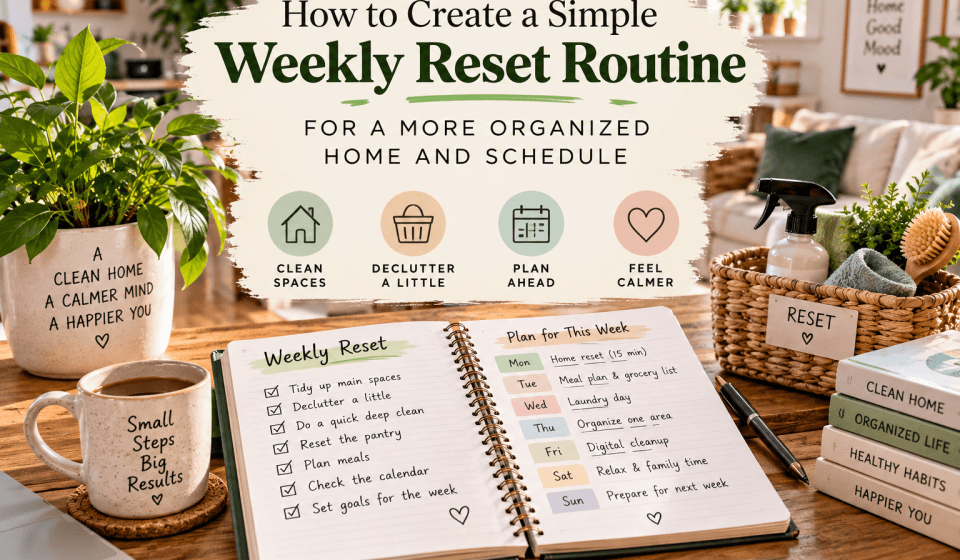

A weekly reset routine is a simple way to bring your home, calendar, and priorities back under control before a new week begins. Instead of trying to fix everything at once, you use a repeatable block of time to tidy the most important areas, plan upcoming commitments, and prepare a few essentials. This guide shows you how to create a realistic weekly reset routine that fits your life, including what to do, what to skip, and how to keep the routine from becoming another stressful obligation.
What Is a Weekly Reset Routine?
A weekly reset routine is a short, scheduled review of your home and schedule. It usually takes place once a week, often on a Sunday or another day before your busiest days begin.
The goal is not to deep-clean your entire home or plan every minute. It is to remove small sources of friction so the coming week feels easier to manage. A reset might include:
- Putting frequently used rooms back in order
- Checking your calendar and upcoming commitments
- Planning a few meals or grocery needs
- Doing laundry or preparing clothes
- Reviewing unfinished tasks
- Choosing your main priorities for the week
The best routine is one you can repeat. It should be useful on an ordinary week, not only when you have lots of energy and several free hours.
How to Create a Weekly Reset Routine
Start by choosing a regular time, deciding what areas need attention, and setting a clear limit for the routine. A simple reset can take 30 to 90 minutes, depending on your household and schedule.
1. Choose a realistic reset time
Pick a time when you are usually available and reasonably alert. Sunday afternoon may work well for one person, while Friday evening or Monday morning may be better for someone else.
Consider your actual week rather than copying someone else’s routine. If weekends are busy with family activities, a short reset on Wednesday evening might make more sense. The day matters less than having a reliable point when you pause, review, and prepare.
Put the reset on your calendar as a recurring appointment. If you share a home, let others know what the time is for and decide which responsibilities belong to each person.
2. Set a time limit
Without a limit, a weekly reset can turn into an exhausting cleaning project. Choose a practical duration, such as 45 minutes, and use a timer if that helps you stay focused.
When the time ends, stop or move only to a task that is genuinely urgent. The purpose is to create a manageable rhythm, not to complete every possible chore.
3. Make a short reset checklist
A checklist keeps you from spending the whole session deciding what to do. Begin with the tasks that have the greatest effect on your week.
Your list might include:
- Clear kitchen counters and wash dishes
- Collect items that belong in other rooms
- Take out rubbish and recycling
- Check the refrigerator and make a grocery list
- Review the calendar for the next seven days
- Plan meals for the busiest days
- Start one load of laundry or prepare work clothes
- Choose three important priorities
Keep the list short enough that you can complete it on a difficult week. You can add optional tasks when you have extra time, but the basic version should still feel worthwhile when life is busy.
A Simple Weekly Reset Routine to Follow
Use the sequence below as a starting point. You can change the order to suit your home and energy levels.
Step 1: Do a quick whole-home reset
Walk through the rooms you use most and return obvious items to their proper places. Focus on visible clutter and practical surfaces rather than organizing every drawer.
Use a basket or tote to gather items that belong elsewhere. Carry the basket from room to room at the end, rather than interrupting yourself repeatedly. This makes the process faster and helps you stay focused on one area.
Pay particular attention to places that affect your next morning, such as the kitchen counter, entryway, bathroom, and bedroom floor. A small amount of order in these areas can make the start of the week feel less rushed.
Step 2: Reset the kitchen
The kitchen often determines how easy meals and mornings will be. Wash or load the dishes, wipe the main counters, and check whether the sink is clear.
Look through the refrigerator and discard food that is no longer usable. Note ingredients that need to be eaten soon. Rather than planning seven elaborate meals, choose two or three dependable options and identify easy combinations for the remaining days.
For example, you might plan:
- One meal that uses ingredients already at home
- One quick meal for a busy evening
- One flexible meal that creates leftovers
- Simple breakfast and lunch options
This approach reduces waste and avoids creating a detailed meal plan that becomes difficult to follow.
Step 3: Review the calendar
Open your calendar, planner, or scheduling app and look at the entire week. Check appointments, school or work deadlines, travel time, birthdays, events, and household responsibilities.
Ask yourself:
- Which days will be especially busy?
- Do I need to leave earlier than usual?
- What needs to be prepared in advance?
- Are there any bills, forms, or deadlines to handle?
- When will I have time for errands, exercise, rest, or chores?
Write down anything that is currently only in your head. A reliable external list is less stressful than trying to remember every commitment while you are already busy.
Step 4: Choose your priorities
Select one to three meaningful priorities for the week. These can be work tasks, household projects, personal goals, or preparation for an important event.
Be specific. “Get organized” is difficult to act on, while “sort the mail for 15 minutes on Tuesday” gives you a clear next step. If a priority is large, divide it into a small action that can fit into your schedule.
Also identify anything that can wait. A weekly planning session should help you distinguish between essential tasks, useful tasks, and tasks that are simply tempting because they are visible.
Step 5: Prepare for the busiest day
Look at the most demanding day ahead and make it easier before it arrives. You might prepare clothing, pack a bag, move an appointment reminder, charge a device, or place ingredients together for dinner.
Preparing for one difficult day often has more value than adding several minor chores to your list. Think of it as removing obstacles from your future self’s path.
Step 6: End with a calm transition
When the checklist is complete, take a few minutes to review the week once more. Confirm that your priorities are written down and that any urgent preparation has a scheduled time.
Then stop. The reset is finished even if the house is not perfect. A clear ending helps the routine remain sustainable instead of expanding into an endless search for things to improve.
How to Adapt the Routine to Your Home
For a small space
Focus on surfaces and storage points that become cluttered quickly. Clear the entryway, kitchen work area, and the place where mail or bags collect. In a small home, five focused minutes in each high-traffic area may be enough.
For a family household
Assign age-appropriate jobs and make the reset a shared activity. One person can check the calendar while another handles laundry or the kitchen. Children may be able to put away toys, match socks, or prepare school items.
Keep responsibilities visible with a simple list. Shared ownership is more useful than one person quietly trying to maintain the entire home.
For a busy or unpredictable schedule
Use a minimum version of the routine. Review the calendar, clear the kitchen sink, handle essential laundry, and choose the next day’s priorities. These four actions can preserve the benefits of a reset when a full session is not possible.
You can also divide the routine into two short sessions. For example, do the home reset on one evening and the schedule review the next morning.
Common Weekly Reset Mistakes
Trying to deep-clean everything
A weekly reset is not a substitute for occasional deep cleaning. If you attempt to scrub every room, clean every cupboard, and reorganize all your belongings, you may avoid the routine altogether. Keep regular maintenance separate from larger cleaning projects.
Creating an unrealistic plan
Planning every meal, exercise session, errand, and household task can make the week feel crowded before it begins. Leave open space for delays, rest, and unexpected needs.
Using the reset to criticize yourself
The routine should help you start again, not serve as evidence that you have fallen behind. Notice what needs attention and decide on the next practical step. Avoid turning unfinished work into a judgment about your character.
Changing the checklist every week
Constantly redesigning the routine uses energy that could go toward completing it. Keep a basic checklist for several weeks, then adjust it based on what consistently helps or causes problems.
Tips for Making the Routine Last
- Keep supplies accessible: Store basic cleaning items, laundry products, and reusable bags where you use them.
- Pair the routine with something pleasant: Play music, make a favorite drink, or listen to a podcast if it helps the work feel lighter.
- Use a visible checklist: A note on the refrigerator, a planner page, or a phone reminder can reduce mental effort.
- Track friction points: If the same problem appears every week, solve the cause rather than repeatedly treating the symptom.
- Allow a shorter version: A 15-minute reset is better than abandoning the habit because you cannot complete the full routine.
- Review what worked: After a few weeks, remove tasks that add little value and keep the actions that make your days noticeably easier.
Frequently Asked Questions
How long should a weekly reset routine take?
There is no required length. A focused routine may take 30 minutes, while a larger household may need 60 to 90 minutes. Start with the smallest amount of time that allows you to improve your home and prepare for the week.
What day is best for a weekly reset?
The best day is the one that gives you enough time to prepare before your busiest commitments. Sunday works for many people, but Friday, Saturday, or a weekday evening can be just as effective.
What should I do if I miss a week?
Do not try to complete two resets at once. Use a shortened version: review the calendar, clear essential clutter, plan immediate meals, and choose the next priority. Resume the normal routine at the next scheduled time.
Should cleaning be part of a weekly reset?
Yes, but keep it focused on maintenance. Prioritize dishes, rubbish, laundry, high-traffic surfaces, and clutter that interferes with daily life. Save detailed cleaning and decluttering for separate sessions.
How can I make a weekly reset routine less overwhelming?
Set a timer, use a short checklist, and begin with the area that will make the next day easier. A routine with a clear minimum version is easier to repeat than an ideal routine that demands too much.
Final Thoughts
A useful weekly reset routine is not about creating a perfect home or controlling every part of your schedule. It is a practical pause that helps you notice what is coming, prepare for the busiest moments, and restore enough order to move forward.
Choose a regular time, focus on the areas that affect your daily life, and keep the routine within realistic limits. Once the basic version feels natural, you can refine it to match your household, energy, and priorities.