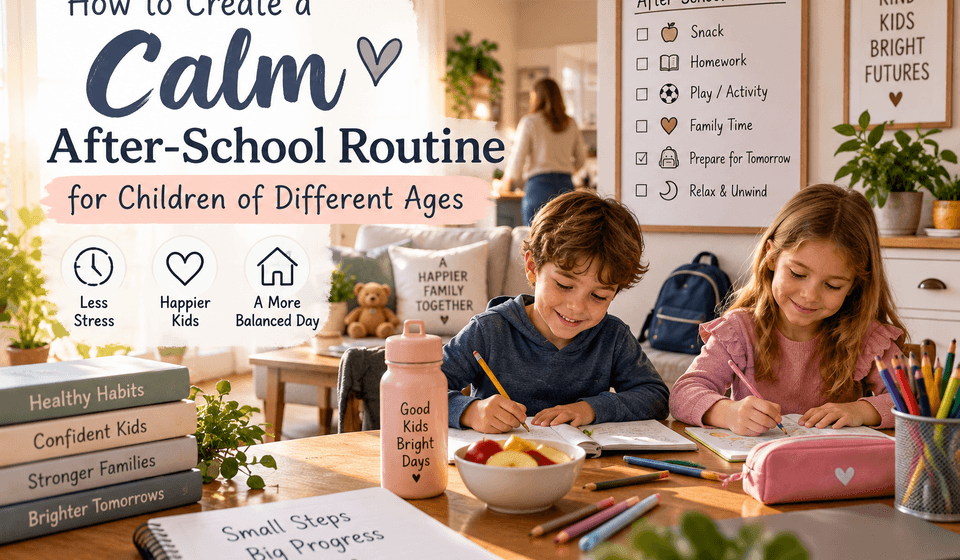

The hours between school pickup and bedtime can feel surprisingly difficult: children are tired, hungry, overstimulated, and often expected to switch quickly from school rules to homework, activities, and family life. A calm after-school routine gives that transition some structure without making home feel like a second classroom.
The best routine will look different for a preschooler, an elementary-age child, and a teenager. In this guide, you’ll learn how to build an age-appropriate rhythm, what to include in the first hour after school, how to handle homework and screens, and how to adjust the routine when your child is exhausted or uncooperative.
What Makes an After-School Routine Calm?
A calm routine is predictable, flexible, and matched to your child’s needs. It does not require every afternoon to run perfectly or every activity to happen at the same time. Instead, it gives children a familiar sequence so they do not have to make many decisions while tired.
Most children benefit from a short transition period before demands begin. A useful basic sequence is:
- Reconnect: Offer a warm greeting and notice how your child seems to be feeling.
- Refresh: Provide water, a snack, and a chance to use the bathroom or wash hands.
- Decompress: Allow quiet play, movement, conversation, or rest.
- Complete responsibilities: Handle homework, chores, reading, or preparation for the next day.
- Enjoy family time: Make room for play, hobbies, dinner, and connection.
This order is more useful than a rigid timetable because it follows children’s natural transition from school to home. Some children need movement before quiet work. Others need silence and solitude. Observe what helps your child settle, then build the routine around that pattern.
How to Create a Calm After-School Routine for Different Ages
Preschoolers and kindergarten children
Young children may appear energetic after school, but they can still be mentally and emotionally worn out. They usually need close support, simple choices, and plenty of unstructured play.
A practical routine for this age might be:
- Greeting and a drink of water
- A small snack with protein or fiber, such as yogurt, cheese, fruit, or toast
- Bathroom and handwashing
- Free play, outdoor time, or a quiet activity
- A brief cleanup with adult help
- Dinner and the usual evening wind-down
Avoid filling the first part of the afternoon with instructions. Give one direction at a time: “Shoes in the basket,” followed by “Now let’s wash your hands.” A picture chart can help children remember the sequence without hearing repeated reminders.
At this age, “quiet time” does not necessarily mean sitting still. Puzzles, blocks, drawing, looking at books, water play, or listening to music can all help a child recover from the stimulation of school.
Elementary-age children
Children in elementary school often need a balance of independence and supervision. They may be able to unpack their bag, choose a snack, and start a task, but they may still need help estimating time and managing frustration.
Try a routine such as:
- Connection with a parent or caregiver
- Snack and water
- Unpacking the school bag and checking notices
- Twenty to forty minutes of play, outdoor activity, or rest
- Homework or reading in a quiet workspace
- Chores, free time, dinner, and preparation for tomorrow
Whether homework comes before or after play depends on the child. If your child is able to focus after a short break, use that pattern. If play becomes difficult to stop, try a brief snack followed by homework, then offer a longer leisure period afterward.
Keep the homework start-up simple. Put pencils, paper, and any needed materials in one place. A short checklist can say: empty folder, check assignment, choose task, work for fifteen minutes, take a break. This teaches organization without requiring a long lecture.
Middle school children and tweens
Tweens often need more privacy and control, but they may also be carrying heavier academic and social demands. A routine should include check-in points rather than constant monitoring.
Invite your child to help design the plan. Discuss questions such as:
- Do you focus better before or after dinner?
- How much downtime do you need when you get home?
- Where will your phone go during homework?
- What needs to happen each evening so mornings are easier?
A tween’s routine might include a snack, twenty to thirty minutes of decompression, a homework block, a short movement break, dinner, and time for hobbies or friends. Use a visible weekly calendar for sports, tests, projects, and appointments so the child can see busy days coming.
Instead of asking repeated questions, agree on a brief check-in. For example, your child might tell you the top two tasks for the evening and when they plan to do them. This supports responsibility while leaving room for independence.
Teenagers
Teenagers may resist routines that feel childish or overly controlled. They still benefit from consistency, but the routine should respect their growing autonomy and changing workload.
Focus on a few non-negotiable anchors rather than controlling every hour:
- Eat or have a reliable snack after school.
- Take a short break before demanding work.
- Set a realistic homework start time.
- Keep devices out of reach when concentration is needed.
- Prepare essential items for the next morning.
- Protect a reasonable bedtime and wind-down period.
Let teenagers choose the details when possible. They may prefer to study at the library, exercise before homework, or complete assignments in two shorter blocks. The goal is not to make the afternoon look organized; it is to help the teenager manage energy, responsibilities, and rest.
Build the First Hour Around Connection and Regulation
The first few minutes at home can set the tone for the rest of the afternoon. Try not to begin with a list of corrections or questions about grades. Start with a greeting, a snack, and a simple observation such as, “You look tired today,” or “I’m glad to see you.”
Some children want to talk immediately. Others need silence. You can say, “You don’t have to tell me about your day yet. Let’s get you comfortable first.” This removes pressure while keeping the door open for conversation later.
Offer two acceptable choices instead of a long list of instructions. For example: “Would you like to play outside or draw while you have your snack?” Limited choices give children control without making the routine unpredictable.
Handle Homework Without Turning Home Into School
Homework is often the point where an otherwise peaceful afternoon becomes tense. Start by checking whether your expectations match the child’s actual energy and workload. A hungry or overwhelmed child may need food, movement, or reassurance before being ready to work.
Helpful homework practices include:
- Use a consistent location with the supplies your child usually needs.
- Break large assignments into small, visible steps.
- Use a timer for a short work period followed by a planned break.
- Stay nearby for younger children, but avoid taking over the work.
- Ask your child to explain the next step rather than immediately giving the answer.
- Contact the teacher if the workload regularly causes distress or takes far longer than expected.
A routine should not require a child to finish every task perfectly at the cost of sleep, food, or family stability. If a pattern continues, share specific information with the teacher: how long the work takes, where your child gets stuck, and what happens emotionally.
Use Screens Intentionally
Screens can provide a useful break, but they can also make transitions harder, especially when a child is already tired. Decide in advance when screens fit into the afternoon and what happens when the time ends.
For younger children, a visual timer and a clear next activity can help: “When the timer rings, we’ll turn it off and have dinner.” For older children, agree on the rule before the screen is turned on. Avoid negotiating the limit repeatedly in the moment.
If screens regularly lead to arguments, experiment with moving them later, shortening the session, or replacing them with a more restful activity such as music, reading, a shower, crafts, or a walk. The right choice depends on whether the screen helps your child recover or leaves them more agitated.
Prepare for Difficult Afternoons
Even a well-designed routine will not prevent every meltdown, argument, or refusal. On difficult days, reduce the number of demands and return to the basics: food, water, connection, rest, and safety.
You might say, “You’re having a hard afternoon. We’ll do the next small step together.” Then choose one manageable action, such as taking off a coat, eating a few bites, or sitting quietly for five minutes.
Look for patterns. Problems may appear after late activities, insufficient sleep, noisy commutes, hunger, friendship difficulties, or several demanding school days in a row. Adjust the routine rather than assuming the child is simply being difficult.
Common After-School Routine Mistakes
- Starting with criticism: Correcting clothes, manners, or homework immediately can make children defensive before they have recovered.
- Scheduling every minute: Children need unstructured time to process the day.
- Using one routine for every child: Siblings may have different energy levels, ages, and needs.
- Changing expectations without warning: Give notice when the usual plan will be different.
- Making the routine too complicated: A short sequence that people follow is better than an impressive schedule nobody can maintain.
- Ignoring the caregiver’s capacity: Build in realistic preparation. Easy snacks, a shared calendar, and a ready homework space can reduce pressure on everyone.
Make the Routine Flexible and Sustainable
Start with three anchors: when your child arrives home, when responsibilities usually begin, and when the evening wind-down starts. Add details only after those anchors work consistently.
Review the routine every few weeks, especially after a change in school hours, activities, sleep, or family schedules. Ask your child what feels helpful and what creates unnecessary stress. A routine is successful when it supports the family, not when it looks perfect on paper.
On busy days, use a shortened version: snack, ten minutes of connection or rest, essential homework, dinner, and preparation for tomorrow. Maintaining the order of the routine can be more valuable than completing every extra activity.
Frequently Asked Questions
How long should a child have to decompress after school?
Many children benefit from roughly twenty to thirty minutes, but the right amount varies. Younger children may need longer free play, while teenagers may need privacy. Watch how your child responds and adjust the length so it refreshes rather than delays the entire evening.
Should homework come before or after play?
There is no universal answer. Try homework after a snack and short break if your child focuses well then. If stopping play causes repeated conflict, use a brief homework block before a longer play period. Choose the order your child can follow consistently.
What if my child refuses the after-school routine?
Make the first step smaller, offer two choices, and check basic needs such as hunger, fatigue, and overstimulation. Introduce changes gradually rather than presenting a long list of new rules. If refusal is frequent or unusually intense, look for stressors at school or home and involve the appropriate teacher or professional.
How can I support more independence?
Use checklists, labeled storage, timers, and a weekly calendar so your child does not need constant reminders. Let them choose the order of flexible tasks while keeping a few clear family expectations, such as eating, homework, and preparing for the next day.