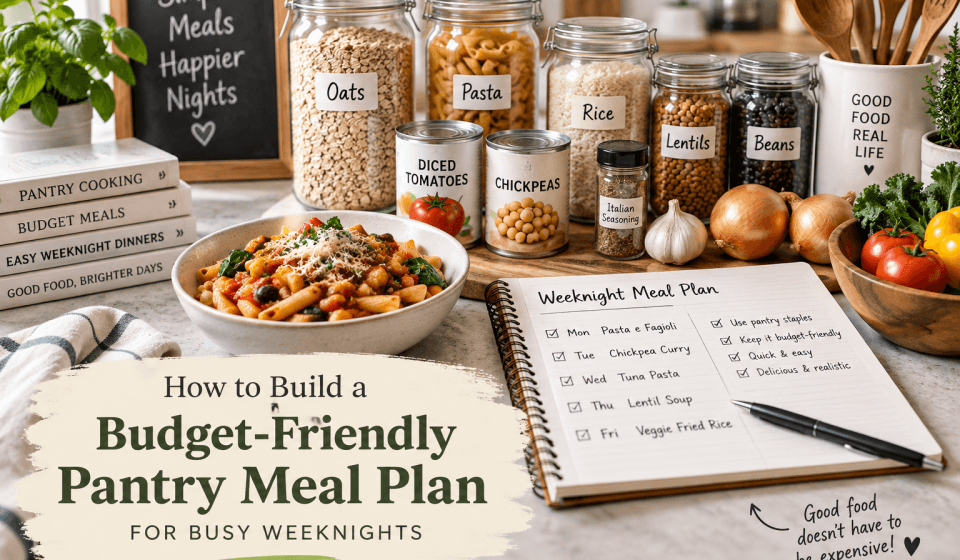

A budget-friendly pantry meal plan can make busy weeknights easier without relying on takeout or an expensive grocery haul. The basic idea is simple: keep a small collection of shelf-stable staples, add a few fresh ingredients, and combine them into flexible meals that cook quickly. This guide shows you how to build a practical pantry meal plan, choose versatile ingredients, plan five dinners, and avoid common mistakes that lead to wasted food or last-minute spending.
What Makes a Pantry Meal Plan Work?
A good pantry plan is more than a list of canned goods. It is a system for turning a few dependable ingredients into different meals. The most useful foods are affordable, easy to store, and flexible enough to work with whatever fresh items you have available.
For busy weeknights, aim for meals that include:
- A filling base, such as rice, pasta, potatoes, oats, tortillas, or bread
- A protein source, such as beans, lentils, canned fish, eggs, peanut butter, or shelf-stable tofu
- Flavor builders, including onions, garlic, spices, broth, soy sauce, salsa, or canned tomatoes
- Optional fresh or frozen ingredients for texture, color, and nutrition
The goal is not to create five completely different recipes with five separate shopping lists. Instead, plan meals that share ingredients while still feeling distinct.
How to Build a Budget-Friendly Pantry Meal Plan
1. Take inventory before shopping
Start by checking your cupboards, refrigerator, freezer, and spice drawer. Write down what needs to be used soon, including half bags of rice, opened pasta, canned vegetables, frozen meat, or sauces nearing their best-by dates.
Group what you find into three categories:
- Use first: fresh produce, opened packages, leftovers, and foods close to their best quality
- Core staples: rice, pasta, canned beans, tomatoes, broth, flour, and seasonings
- Meal starters: curry paste, salsa, pesto, tuna, canned coconut milk, or jarred pasta sauce
This step prevents duplicate purchases and often reveals that you already have the ingredients for at least one dinner.
2. Choose a small group of flexible staples
Select ingredients that can be used in several ways. For example, a can of chickpeas can become pasta sauce, taco filling, curry, or a salad topping. Rice can accompany beans, become fried rice, or serve as the base for a soup bowl.
Useful pantry staples include:
- Rice, pasta, couscous, quinoa, or other grains
- Canned beans, lentils, and chickpeas
- Canned tomatoes, tomato paste, and jarred pasta sauce
- Broth or bouillon
- Canned tuna, salmon, chicken, or sardines
- Peanut butter or other nut and seed butters
- Flour tortillas, crackers, or shelf-stable flatbreads
- Cooking oil, vinegar, soy sauce, and hot sauce
- Onions, garlic, and a few dependable dried herbs and spices
You do not need every item on this list. Pick staples that match the meals your household actually enjoys.
3. Add a few high-impact fresh foods
A pantry-centered plan does not mean eating only shelf-stable food. A few fresh ingredients can improve several meals at once. Choose items that last well and can be used in multiple dishes.
- Carrots, cabbage, onions, and potatoes
- Apples, oranges, or bananas
- Eggs
- Cheese or plain yogurt
- Fresh greens or a bag of spinach
- Lemons or limes
Frozen vegetables are also excellent for quick dinners. They are easy to portion, require little preparation, and can go directly into soups, stir-fries, pasta, and rice dishes.
4. Plan by components instead of strict recipes
Rather than assigning a complicated recipe to every night, choose a few components and mix them throughout the week. For example, cook a large pot of rice, prepare a seasoned bean mixture, and wash or chop vegetables. These components can become bowls, burritos, fried rice, or soup.
This approach allows you to change dinner based on your energy level. A planned ingredient can be used in a ten-minute meal one night and a more involved dish later in the week.
A Five-Night Pantry Dinner Plan
The following example uses inexpensive staples and can be adjusted for dietary needs or ingredients already in your kitchen.
Night 1: Tomato chickpea pasta
Cook pasta and combine it with canned tomatoes, chickpeas, garlic, onion, and Italian seasoning. Add spinach or frozen vegetables if available. Finish with grated cheese, olive oil, or a spoonful of plain yogurt.
This meal is filling, inexpensive, and easy to adapt. White beans or lentils can replace chickpeas, while rice can replace pasta if that is what you have.
Night 2: Bean and rice bowls
Warm canned black beans or pinto beans with cumin, chili powder, garlic, and a little broth. Serve them over rice with salsa, shredded cabbage, cheese, or a fried egg.
For extra flavor, add lime juice, hot sauce, or a quick yogurt topping. Leftover beans can be used in quesadillas or soup later in the week.
Night 3: Pantry vegetable soup
Simmer broth with canned tomatoes, carrots, potatoes, pasta, beans, and frozen vegetables. Season with herbs, pepper, and a small splash of vinegar or lemon juice at the end.
Soup is a useful way to combine small amounts of leftover ingredients. If you have cooked chicken, sausage, rice, or greens, add them near the end so they warm through without overcooking.
Night 4: Peanut noodles or stir-fried rice
For peanut noodles, mix peanut butter with soy sauce, vinegar, garlic, and warm water to make a quick sauce. Toss it with cooked noodles and frozen vegetables. Add chili flakes or hot sauce if desired.
Alternatively, use leftover rice to make fried rice with eggs, frozen vegetables, soy sauce, and any remaining protein. Cold, refrigerated rice works especially well because it is less likely to become mushy in the pan.
Night 5: Pantry quesadillas or flatbread pizzas
Fill tortillas with beans, cheese, canned corn, and leftover vegetables, then cook until crisp. Serve with salsa or a simple cabbage slaw.
For flatbread pizzas, spread tortillas or naan with tomato sauce, add cheese and vegetables, and bake until the edges are crisp. Canned tuna, olives, mushrooms, or leftover chicken can serve as toppings.
How to Keep Pantry Meals Affordable
Buy ingredients with more than one purpose
Before buying an item, identify at least two or three meals where you can use it. A bag of frozen broccoli is more valuable than a specialty vegetable that fits only one recipe. The same applies to sauces, cheeses, herbs, and proteins.
Use canned and dried beans strategically
Canned beans are convenient for nights when time matters. Dried beans generally require more planning but can be economical when you have time to cook a larger batch. Keep both if your budget and storage space allow.
Rinse canned beans if you prefer a milder flavor or want to remove some of the surface liquid. Save a little bean liquid when making dips or sauces; it can help create a smoother texture.
Stretch meat instead of making it the center of every meal
If your household eats meat, use a smaller amount as a flavor or topping rather than the entire foundation of dinner. Mix ground meat with lentils in tacos, add shredded chicken to bean soup, or use canned tuna in pasta with vegetables.
Eggs, beans, lentils, and peanut butter can also provide satisfying protein at a lower cost than many meat-based meals.
Cook once and reuse safely
Prepare a large batch of rice, grains, roasted vegetables, or beans and use it in several meals. Store cooked foods in shallow containers and refrigerate them promptly. Reheat leftovers until steaming hot, and discard food that has been left at room temperature for an extended period.
Label containers with the date so older food gets used first. If you will not eat leftovers soon, freeze portions for a future weeknight.
Flavor Combinations That Prevent Meal Fatigue
Repeating ingredients does not have to mean repeating flavors. Change the seasonings and finishing touches to make the same base feel different.
- Mexican-inspired: cumin, chili powder, salsa, lime, and cilantro
- Mediterranean-inspired: oregano, lemon, garlic, olives, and yogurt
- Asian-inspired: soy sauce, ginger, sesame oil, vinegar, and chili crisp
- Indian-inspired: curry powder, turmeric, cumin, coconut milk, and chutney
- Italian-inspired: basil, oregano, garlic, tomato, and Parmesan
A finishing ingredient can make a major difference. Try lemon juice, vinegar, toasted seeds, grated cheese, fresh herbs, hot sauce, or a spoonful of pesto just before serving.
Common Pantry Meal-Planning Mistakes
Buying too many single-use ingredients
A recipe may look inexpensive, but its cost rises when it requires several ingredients you will not use again. Choose meals that overlap in their main components, and substitute freely when a recipe calls for a specialty item.
Planning only fast meals
Five ten-minute dinners may sound ideal, but they can become repetitive and leave you without leftovers. Include one meal that makes a larger batch, such as soup, chili, or baked pasta. The extra portions can cover lunch or a night when cooking is not practical.
Ignoring texture
Pantry meals can become soft or repetitive if every ingredient is simmered together. Add crunchy cabbage, toasted nuts, crackers, fresh cucumber, pickled onions, or crisp tortillas to create contrast.
Forgetting a backup dinner
Keep one emergency meal on hand for especially busy nights. Examples include boxed pasta with canned tuna and peas, quesadillas with beans, or eggs on toast with frozen vegetables. A dependable backup can prevent an unplanned restaurant order.
Simple Pantry Planning Checklist
- Check what you already have.
- Choose three to five main ingredients to use up.
- Select two or three filling bases, such as rice, pasta, or tortillas.
- Add affordable proteins and frozen or fresh vegetables.
- Plan one batch-cooked meal and one emergency meal.
- Write down how leftovers will be reused.
- Shop only for the gaps in your pantry and refrigerator.
Frequently Asked Questions
How many meals should a pantry plan include?
Start with three planned dinners and one flexible leftover night if a full week feels difficult. Once you know which staples your household uses, expand to five meals without making the shopping list much larger.
What are the best cheap pantry proteins?
Canned or dried beans, lentils, chickpeas, eggs, peanut butter, and canned fish are versatile options. The best choice depends on your dietary preferences, local prices, and how often you cook.
Can a pantry meal plan include fresh food?
Yes. Fresh and frozen ingredients improve flavor, texture, and variety. Choose foods that work across several meals, such as onions, carrots, cabbage, eggs, greens, frozen vegetables, and citrus.
How can I make pantry meals more filling?
Combine a carbohydrate with protein and vegetables. Rice with beans, pasta with lentils, eggs with potatoes, and tortillas with chickpeas are simple combinations that create more satisfying meals than a single ingredient alone.
How often should I restock pantry staples?
Check your pantry once a week before grocery shopping and restock based on actual use. Keep a short list of essentials, but avoid buying large quantities of foods your household rarely eats.
A budget-friendly pantry meal plan works best when it is flexible rather than perfect. Stock a few reliable bases, proteins, vegetables, and flavor boosters, then plan meals around what you already have. With a little preparation, those ingredients can become quick dinners that save money, reduce food waste, and make busy weeknights much less stressful.