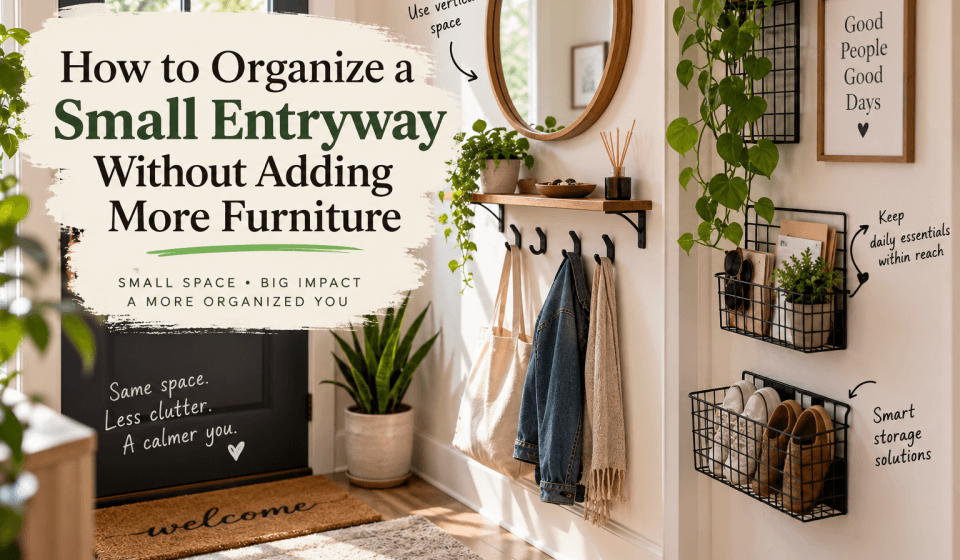

A small entryway can become crowded quickly, especially when coats, shoes, bags, keys, and mail all land in the same few feet of space. The good news is that you can organize a small entryway without adding more furniture by making better use of walls, doors, existing surfaces, and daily routines. This guide explains how to reduce visual clutter, assign every essential item a place, and create a practical drop zone without bringing in another cabinet, bench, or console table.
Start by Removing What Does Not Belong
Before organizing anything, empty the entryway completely. Include the floor, hooks, nearby shelves, baskets, and the area just inside the front door. Group everything into four categories:
- Daily essentials: items you use whenever you leave, such as keys, a wallet, a work bag, or a dog leash.
- Occasional items: umbrellas, hats, seasonal accessories, and reusable shopping bags.
- Items that belong elsewhere: toys, paperwork, shoes you rarely wear, and packages waiting to be opened.
- Items to discard or donate: broken accessories, duplicate bags, worn-out shoes, and coats no longer in use.
Keep only the things that genuinely need to be near the entrance. A small entryway usually feels crowded because it is being asked to store too many categories, not because it lacks another piece of furniture.
As a practical rule, keep everyday items within easy reach and move infrequently used belongings to a closet, bedroom, or seasonal storage area. The entryway should support departures and arrivals, not act as a general-purpose storage room.
How to Organize a Small Entryway Without Adding More Furniture
The most effective approach is to create a few simple zones using storage you already have or small wall-mounted and hanging organizers. Think vertically, use overlooked surfaces, and limit the number of items allowed in each zone.
Create a daily essentials zone
Choose one consistent location for keys, sunglasses, wallets, access cards, and other small items. This might be a shallow wall pocket, a mounted key rail, a small dish on an existing shelf, or a container placed inside a nearby cupboard.
Keep this zone deliberately small. If the container is large enough to hold everything, it may quickly fill with receipts, loose change, batteries, and random objects. A compact tray or narrow wall organizer encourages you to keep only what you use regularly.
If several people use the entrance, assign each person a hook or section rather than creating one shared pile. Clear ownership makes it easier to spot missing items and prevents keys or bags from being left on the floor.
Use vertical wall space
Walls often offer the most useful storage in a compact entrance. A row of hooks can hold coats, handbags, backpacks, dog leads, and lightweight umbrellas without taking up floor space.
Place the hooks according to how they will be used. The most accessible hooks should be reserved for daily bags and outerwear. Higher hooks can hold occasional items or belongings used by taller household members. If children use the entryway, install a lower set of hooks at a safe, reachable height.
Do not fill every hook permanently. Leaving one or two empty spaces gives coats room to hang properly and makes it easier to put things away. Overloaded hooks make the area look messy and can cause items to slide onto the floor.
Make the back of the door work harder
The inside of an entry door, closet door, or nearby bedroom door can provide hidden organization. An over-door organizer, adhesive pockets, or slim hooks can hold small, lightweight items such as:
- Gloves and hats
- Reusable shopping bags
- Pet-walking supplies
- Scarves
- Umbrellas
- Mail that needs to leave the house
Choose a shallow solution if the door opens into a narrow passage. Anything too deep may interfere with the wall, handle, or door swing. Before installing adhesive products, check the manufacturer’s weight limit and test whether the surface is suitable.
Give shoes a strict boundary
Shoes are often the biggest source of entryway clutter. Without adding a shoe cabinet or rack, you can still control them by setting a clear limit. For example, allow only one pair per person near the door and move additional pairs to bedroom storage or a closet.
A washable mat or low-profile shoe tray can define the shoe area and protect the floor. If you already have a shelf, cubby, or closet nearby, use one specific section for everyday shoes instead of allowing footwear to spread across the entrance.
Keep wet or muddy shoes separate from clean footwear. A boot tray, absorbent mat, or temporary drying spot prevents water from spreading while keeping the rest of the entryway orderly.
Organize by Routine, Not by Object
Many storage systems fail because they group items by type rather than by the action they support. Instead of asking where all hats or bags should go, consider what happens when you leave and return.
Build a “leaving home” zone
Place items you need before going out close together. Keys, sunglasses, a wallet, and a frequently used bag should be easy to grab within a few seconds. A hook beside the key tray may work better than storing the bag in a separate room.
You can also create a small “take with me” area for items that need to leave the house. Use one labeled pocket or basket for library books, returns, letters, or packages. The important point is to empty it regularly so it does not become a permanent holding area.
Build a “coming home” zone
Decide where coats, bags, shoes, and keys go immediately after you enter. Keep the process simple enough to follow when you are tired or carrying groceries.
- Hang the coat on an assigned hook.
- Place the bag on its hook or in its designated compartment.
- Put keys in the tray or wall pocket.
- Leave shoes on the mat or return them to their storage space.
The fewer decisions required, the more likely the system is to last. If an item repeatedly lands on the floor, that is useful information: its assigned storage spot may be too far away, too difficult to reach, or too small.
Use Existing Storage More Efficiently
You may not need new furniture; you may need to change how current storage is used. Empty a nearby cupboard, shelf, or drawer and dedicate part of it to entryway essentials.
Use small boxes or containers to divide deep shelves. One container can hold hats and gloves, another can hold pet supplies, and a third can store spare keys or seasonal accessories. Grouping small items prevents them from disappearing at the back of a large compartment.
If you have an entryway shelf, keep its surface mostly clear. Reserve it for one useful tray, a small lamp, or a carefully chosen decorative object rather than allowing every arriving item to accumulate there. Open surfaces are easier to maintain when they are not treated as temporary storage.
For renters or anyone who cannot drill into walls, consider removable hooks, tension-mounted organizers, hanging door storage, or freestanding solutions you already own elsewhere in the home. Always follow product instructions and avoid placing heavy objects where they could fall into a walkway.
Reduce Visual Clutter With Simple Rules
Organization is partly about capacity and partly about appearance. Even a functional entryway can feel chaotic when too many colors, patterns, and loose objects compete for attention.
- Limit visible coats: Move bulky or seasonal outerwear to a closet when it is not needed daily.
- Use matching or coordinated containers: Similar baskets or boxes create a calmer appearance, but buying new ones is not essential.
- Hide small objects: Keys, chargers, receipts, and pet accessories look neater inside a tray, pocket, or drawer.
- Keep the floor open: A clear walking path makes the entire entrance feel larger.
- Choose one decorative focus: A mirror, print, plant, or small bowl is usually enough in a compact space.
A mirror can be especially useful if you already have one available because it provides a last-minute checking spot without taking up floor space. Mount it securely and position it where it will not obstruct hooks or door movement.
Common Small-Entryway Organization Mistakes
Trying to store every coat and shoe by the door
The entryway should hold what you use regularly, not your entire wardrobe. Rotate seasonal clothing and keep formal shoes, spare boots, and extra bags elsewhere.
Using containers that are too large
Large baskets may seem versatile, but they often become clutter bins. Choose containers that match the volume of items you actually need to store. A narrow pocket or small tray is often more effective than a deep basket.
Putting storage where it blocks movement
Measure the door swing and walking path before adding hooks, organizers, or wall pockets. Keep passageways clear, and avoid placing items where they can catch on clothing or become a tripping hazard.
Creating a system that requires too many steps
If putting something away involves opening several doors, moving other items, or reaching overhead, it probably will not be used consistently. Everyday items should have the easiest storage locations.
Organizing once and never reviewing the system
Entryway needs change with weather, work schedules, school routines, and household habits. Review the area every few weeks. Remove items that no longer belong and adjust hook or container assignments if the same problem keeps returning.
A Five-Minute Maintenance Routine
Once the entryway is organized, a short reset can keep it under control. At the end of the day or before bed:
- Return loose shoes to the mat or their storage area.
- Hang coats and bags on their assigned hooks.
- Put keys and small essentials back in the daily-use container.
- Move mail, packages, and items that belong elsewhere.
- Clear the walking path and shake out the mat if needed.
For households with several people, make the rule visible and simple: everyone returns their own items to the same place. A consistent routine is more valuable than an elaborate storage setup.
Frequently Asked Questions
What is the best way to organize a small entryway without adding furniture?
Start by removing nonessential items, then use vertical space with hooks, a narrow wall pocket, or door-mounted storage. Assign one location for keys and small essentials, limit the number of shoes and coats kept near the entrance, and use nearby cupboards or shelves for overflow.
How can I store shoes when there is no room for a shoe rack?
Set a limit on the number of shoes kept by the door and use a washable mat or slim tray to define their space. Store additional pairs in an existing closet, bedroom shelf, or under-bed container rather than allowing them to spread across the floor.
How do I keep a small entryway from becoming a dumping ground?
Give every common item a specific destination and create a separate, limited spot for things that need to leave the house. Empty that spot regularly. If an object has no clear purpose or storage location, move it out of the entryway.
What can I use if I cannot drill into the wall?
Try removable hooks, adhesive organizers suited to the wall surface, over-door pockets, tension solutions, or storage inside an existing cupboard. Check weight limits carefully and avoid hanging heavy objects from products intended only for light items.
How often should I declutter the entryway?
A quick daily reset is ideal, while a fuller review every few weeks helps remove seasonal items, unused bags, and accumulated paperwork. Adjust the system whenever your routine changes.